Palio di Provenzano
“There isn’t a lot going on here, but Palio. Palio is the reason I will never leave.”
Andrea, Siena local
This text was written after the 2025 edition of the Palio di Provenzano in Siena, Italy. The photos are all original pieces from 4 days in the city with my dear friend Johan. Together we were emerged into the deep tradition that has been in this town for almost 800 years. The original photos and writing here give a glimpse into that experience.
I · Preparation and postponement
Siena has always lived in the shadow of its louder neighbours, Florence and Pisa, but for a time it was a powerhouse of the region. In the thirteenth and fourteenth centuries the city was a hub of banking, and that wealth bought it an architecture and an art movement of its own. Then the Black Death hit, and hit hard. The decline that followed ended with Siena’s absorption into the Florentine state in 1555.
It was during that era of power that horse racing took hold here. Races known as palii are recorded as early as 1232 and were formalised in 1482. Precise dating of the races begins in 1633, and in 1659 the course around the Piazza del Campo was established, the exact track the Palio is run on to this day.
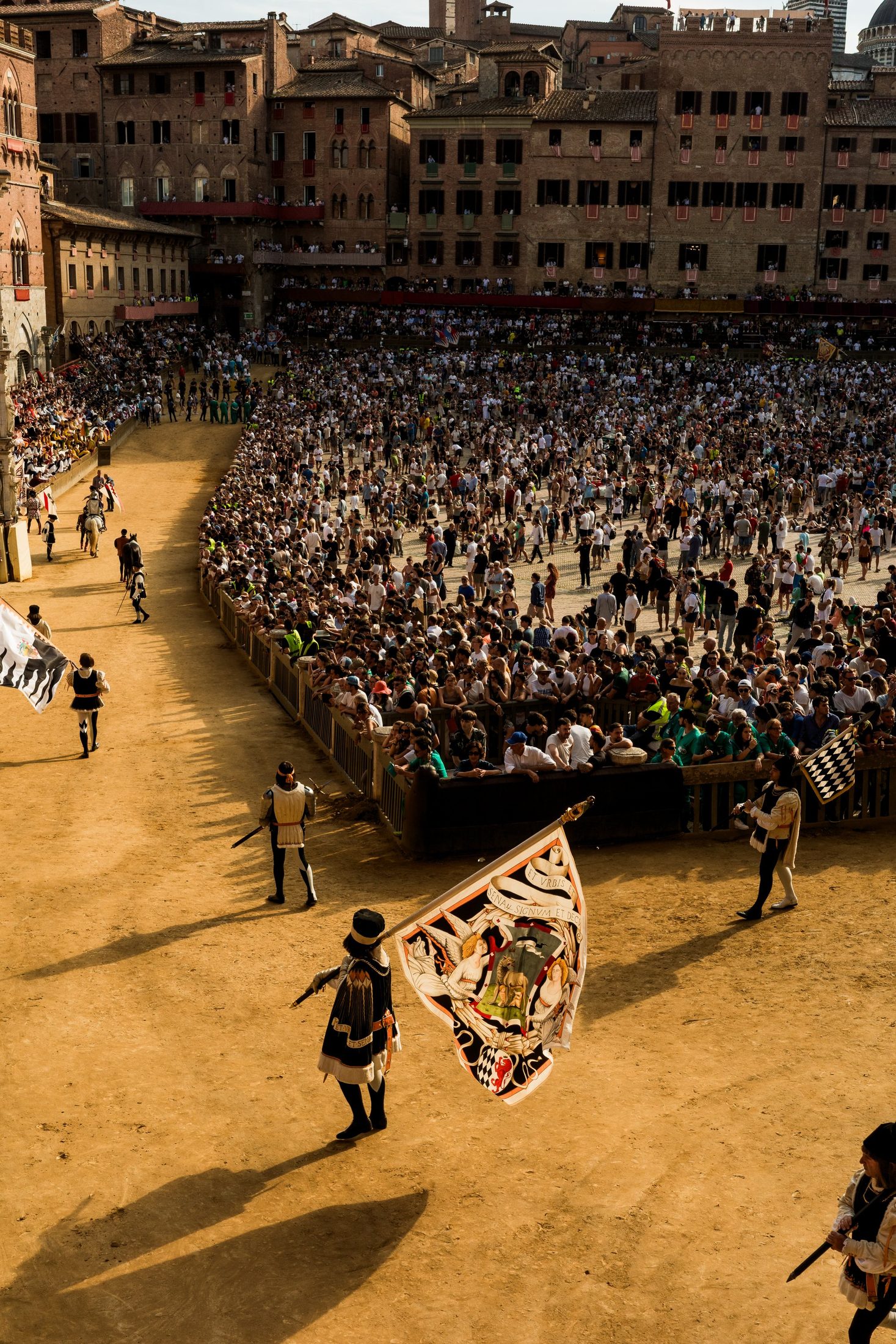
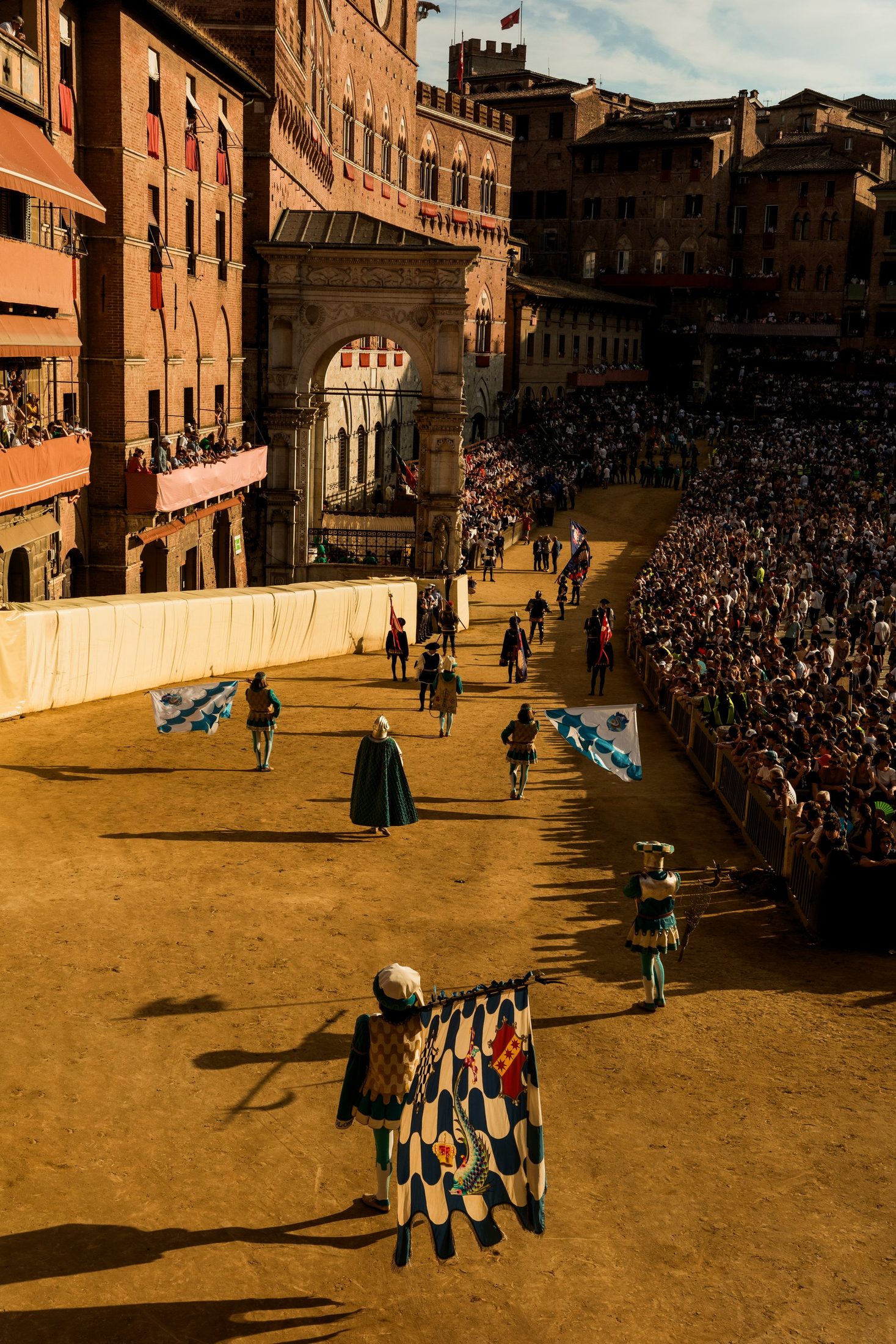
The Palio di Siena is a celebration of Sienese identity and tradition: an occasion for the contrade, the city’s historic neighbourhoods, to display their pride and their rivalry, and a way to honour the protectors of the city, the Madonna of Provenzano and Mary of the Assumption. There are two races a year: the Palio di Provenzano on 2 July and the Palio dell’Assunta on 16 August. We were there for Provenzano, 2025.
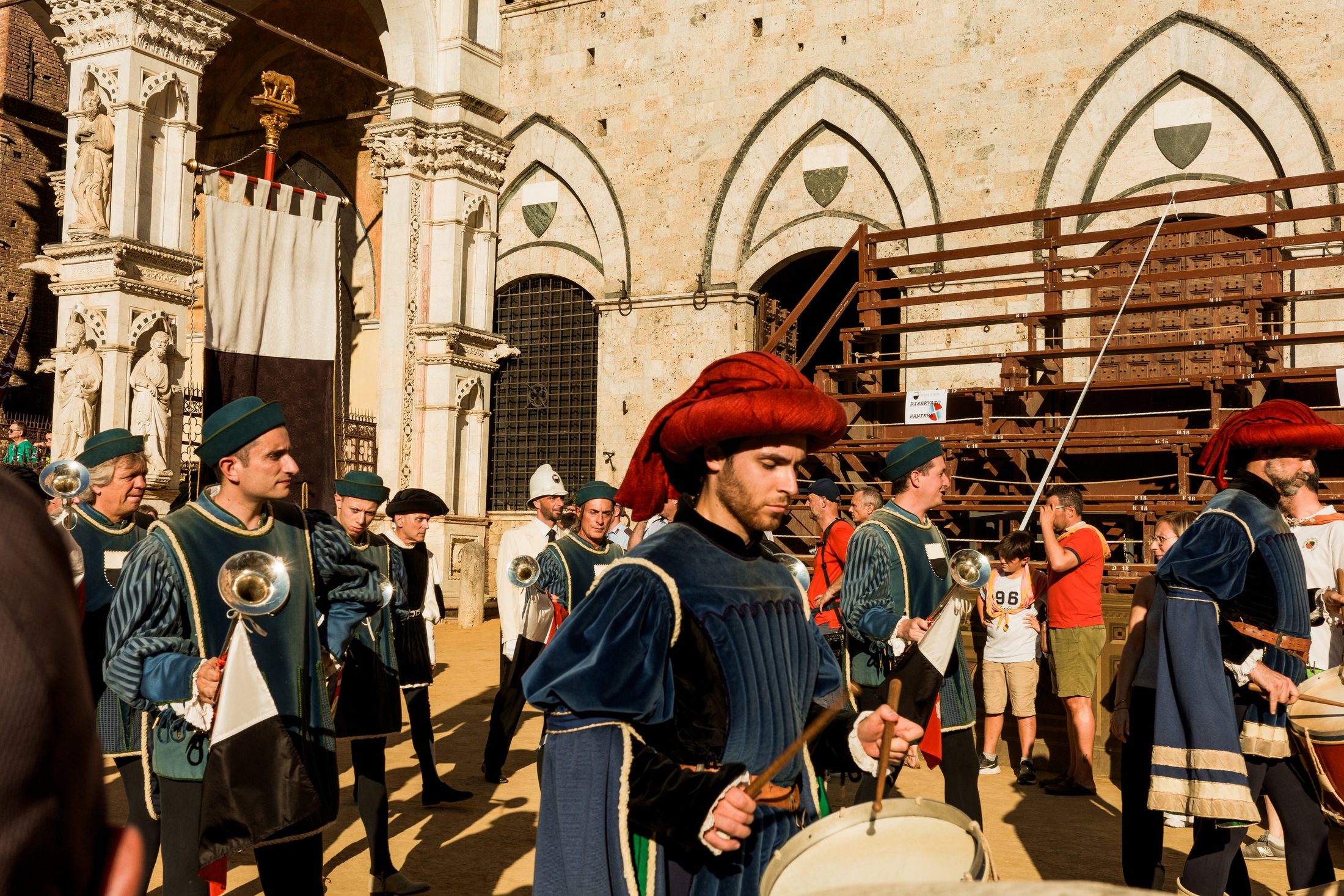
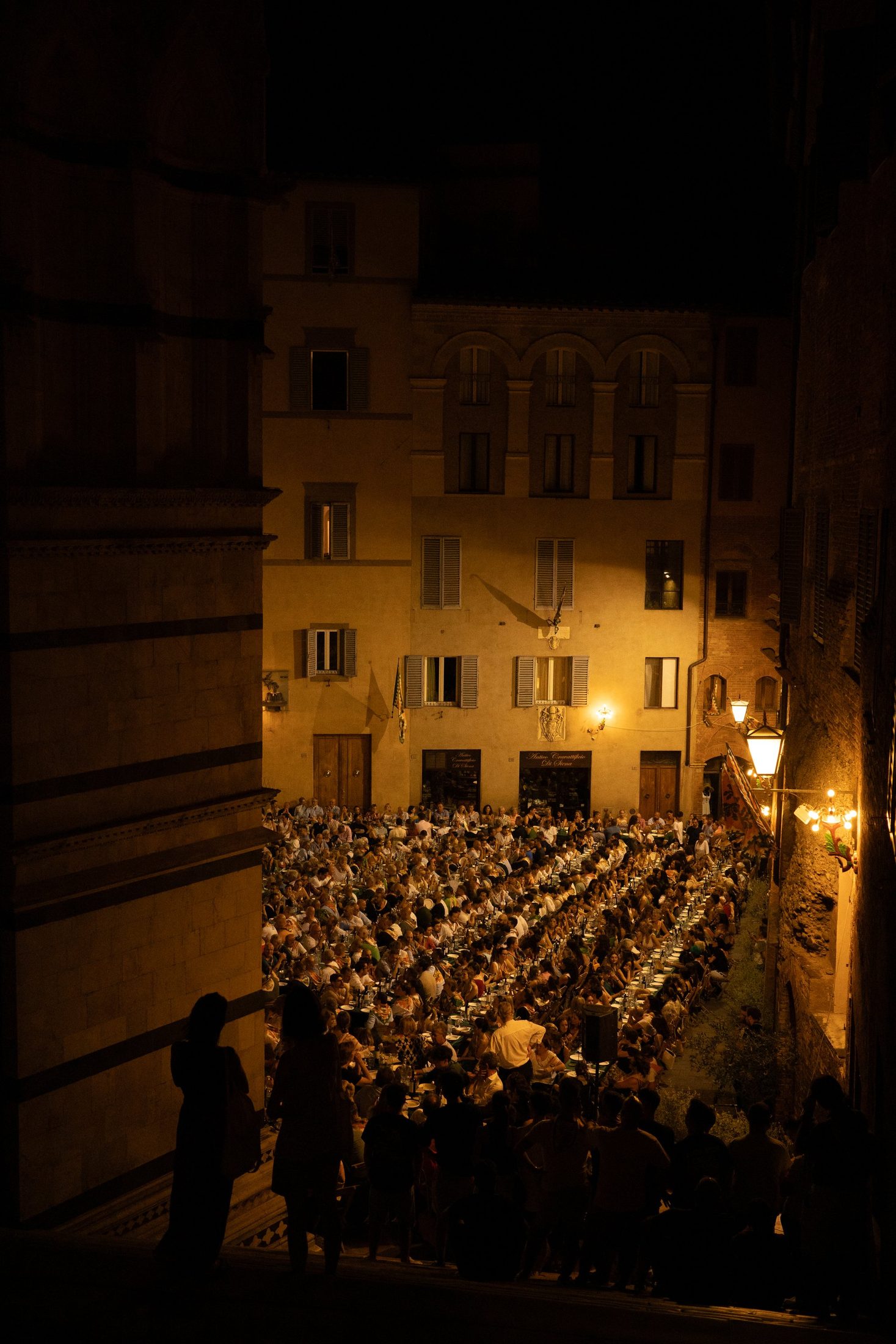
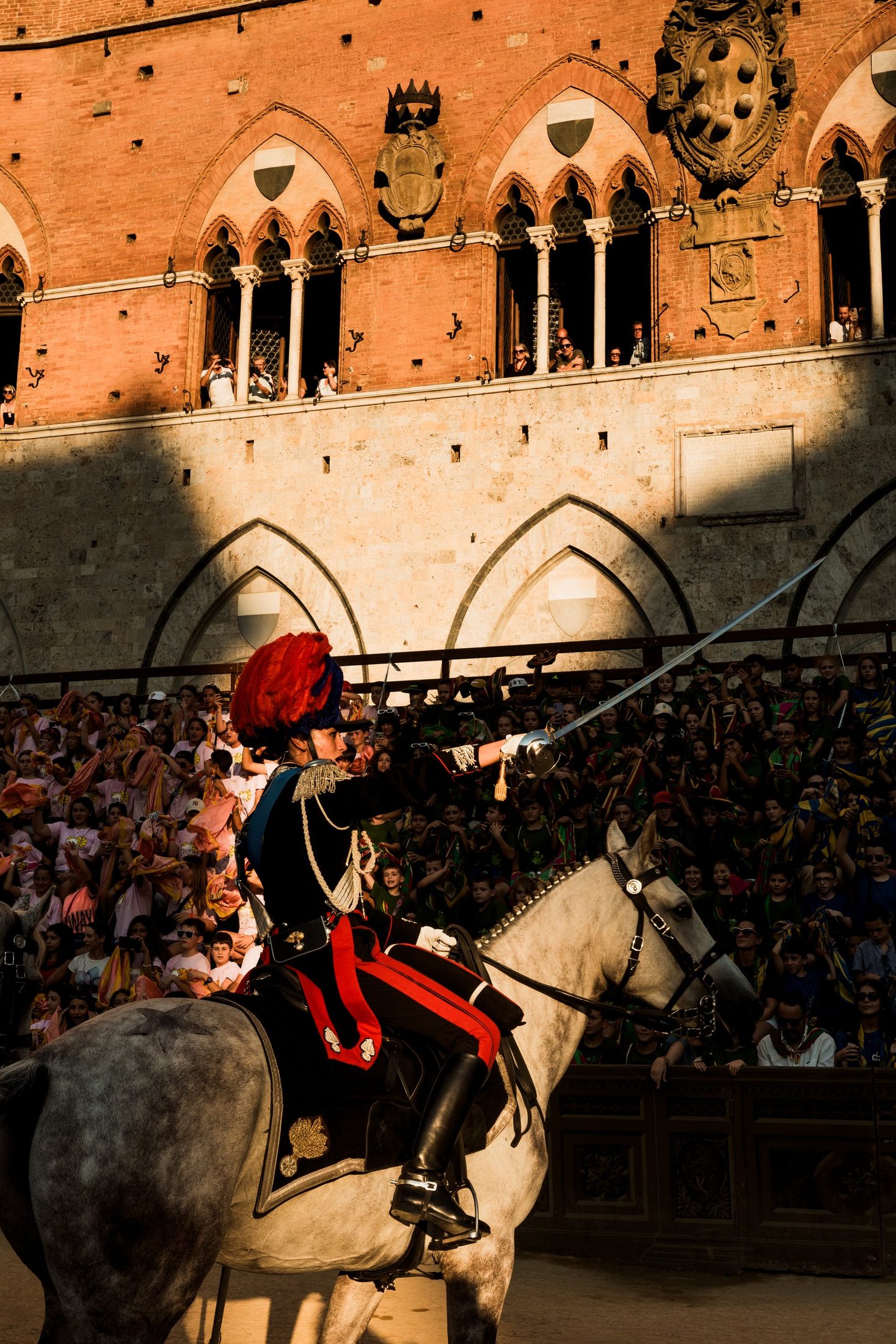
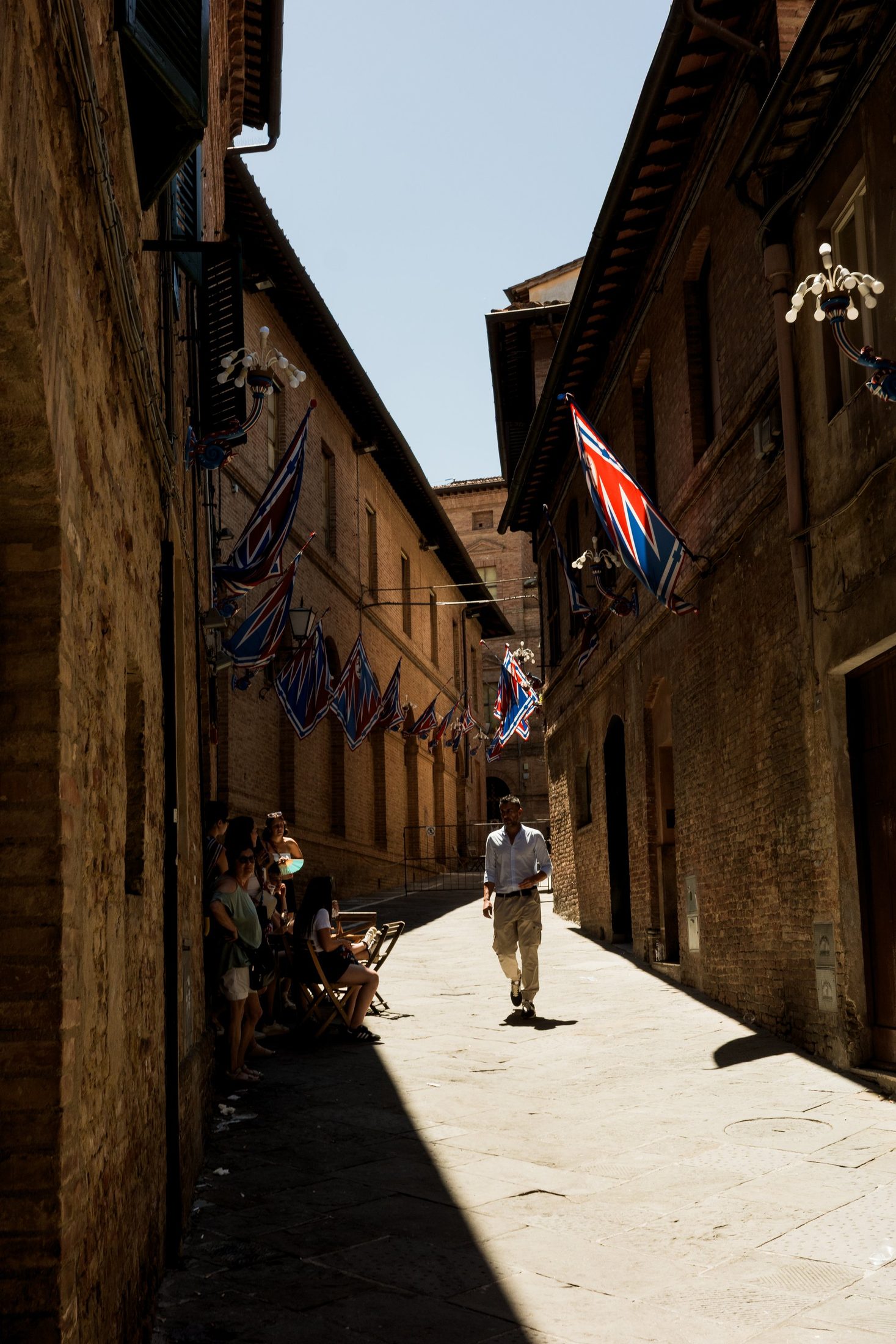
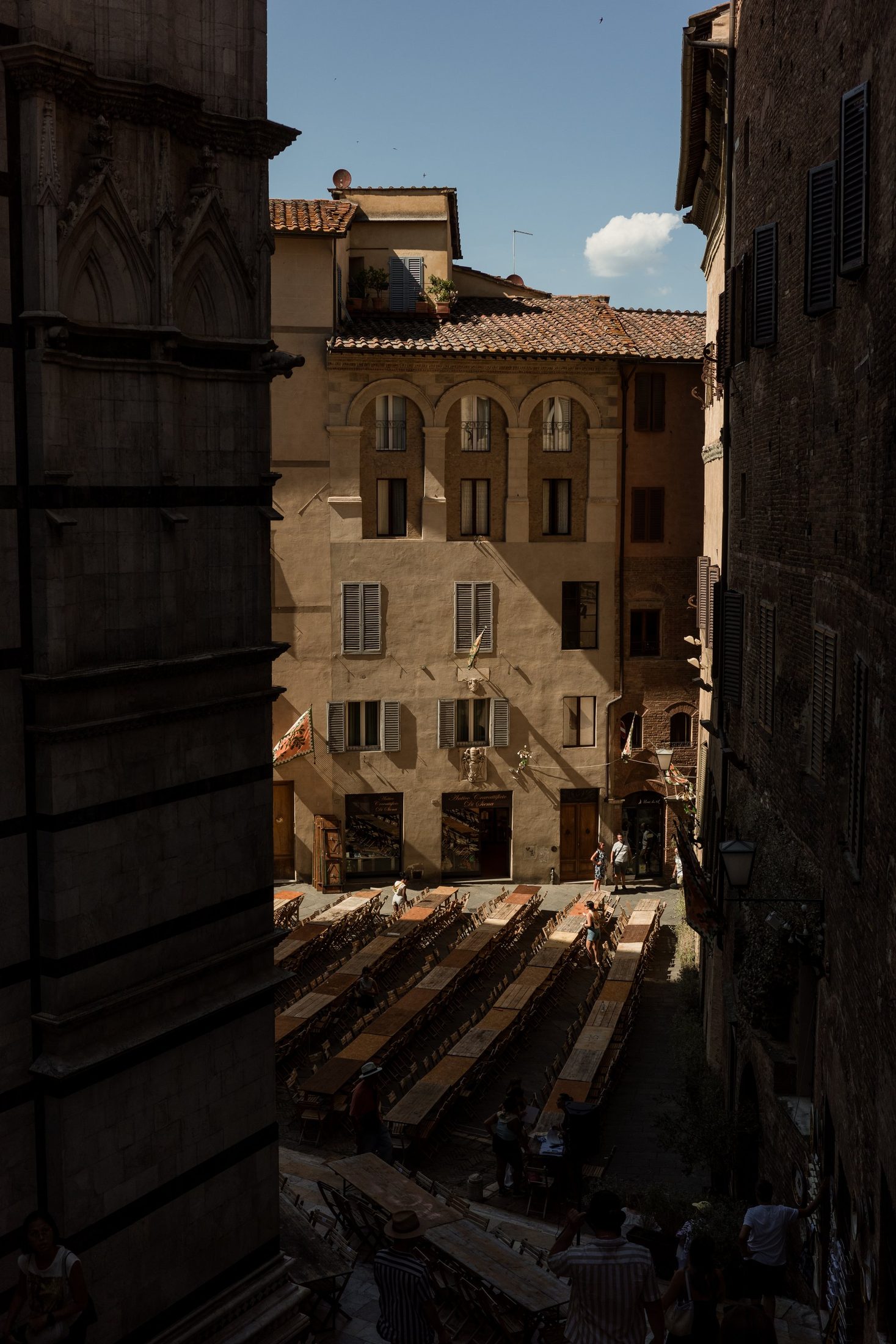
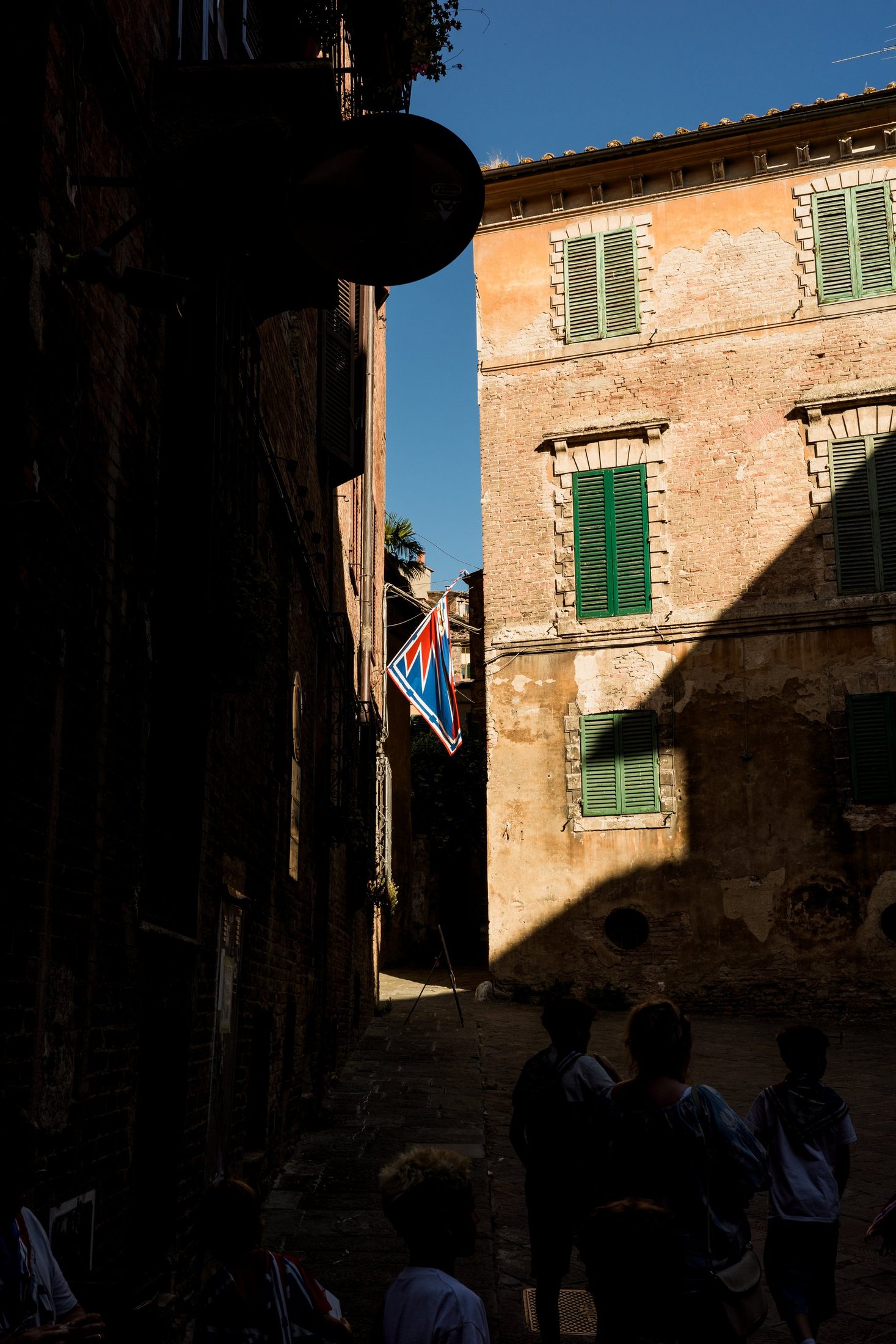
The photographs here begin in the days before the race: the Prova Generale, the Cena della Prova Generale, the Benedizione, the blessing of the horses, and the festivities that fill the streets in between. The feeling is tense. Emotions run high and rivalries flare. Between the roar of the crowds and the silence of the blessings, the energy of the city is unlike anything else; hundreds of years of tradition carry weight. This year the Palio was postponed a day for rain, which only wound the tension tighter.
II · The contrade
At the core of the Palio are the contrade: seventeen historic districts that divide the medieval city, each with its own colours, emblem, church and fiercely loyal community. A contrada is much, much more than where you live.
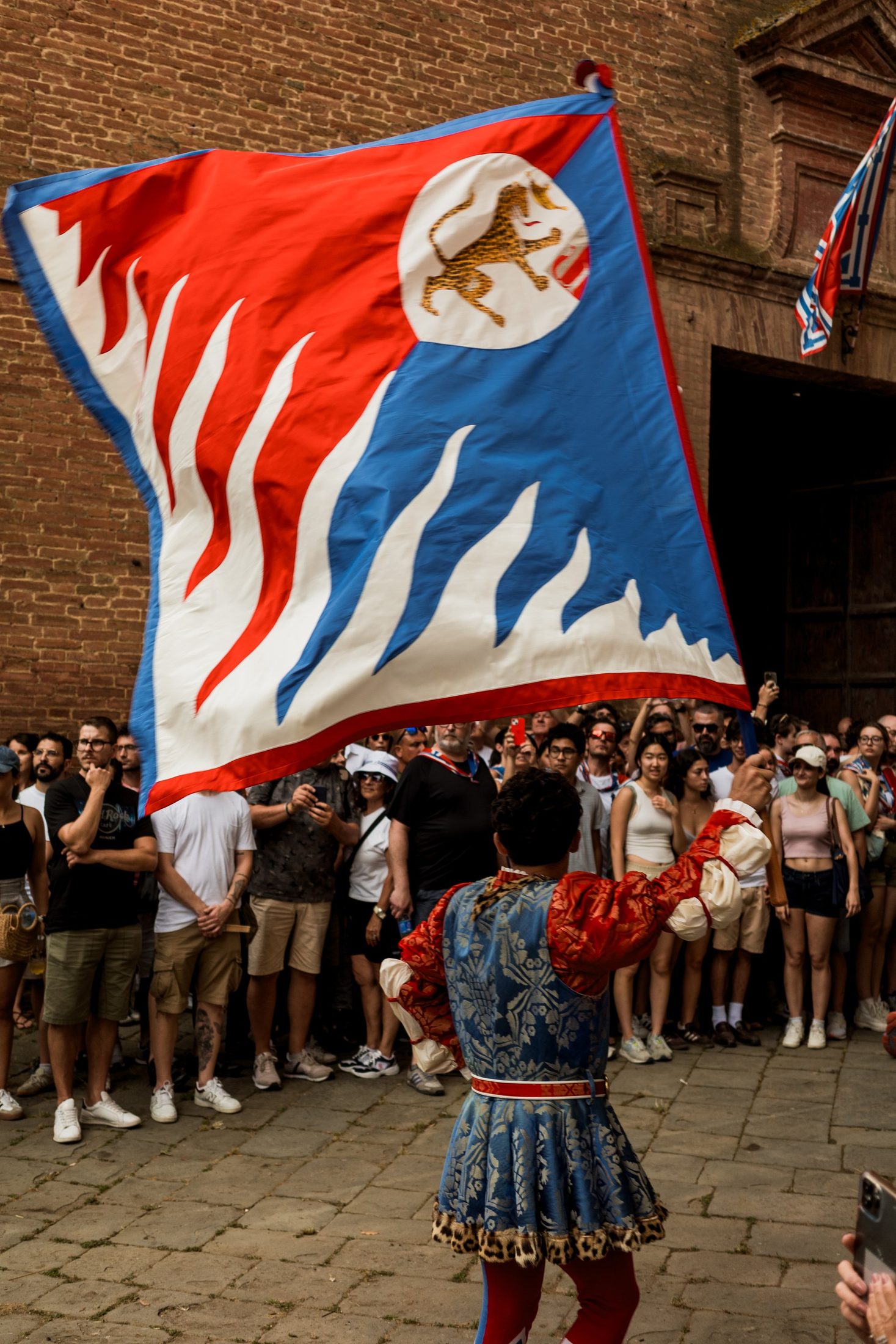
Here is Civetta, the Little Owl. We were lucky enough to see their alfieri, the flag thrower, practising beneath sunlit archways, black-and-white emblems fluttering in rhythm with the heartbeat of the city. The young man was preparing for his first Palio ceremony. Watching those moments of learning, of knowledge passed from one generation to the next, was special. Behind all of these traditions and displays are people, and wherever in the world you find something like this, it only exists because of people not so different from you and me.
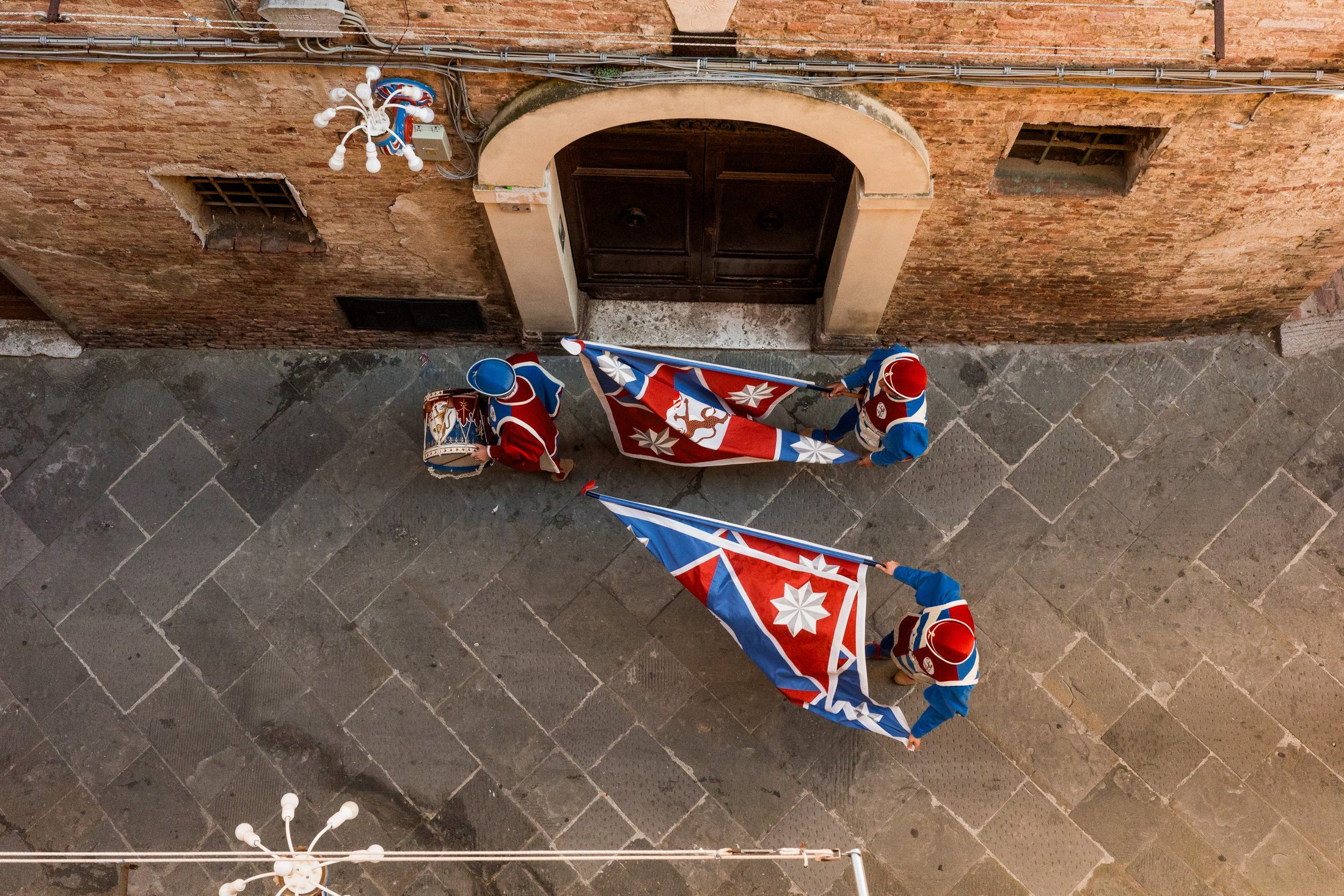
This year we stayed in the Contrada della Pantera, the Panther. Tucked into the western slopes of Siena, Pantera is known for the loyalty of its residents and its proud history. Over meals and late-night toasts we learned that the Palio is not a performance but a way of life, handed down through generations. Talking with members and being invited to see their processions was eye-opening. Their colours are blue and red, and they appear often in this series.
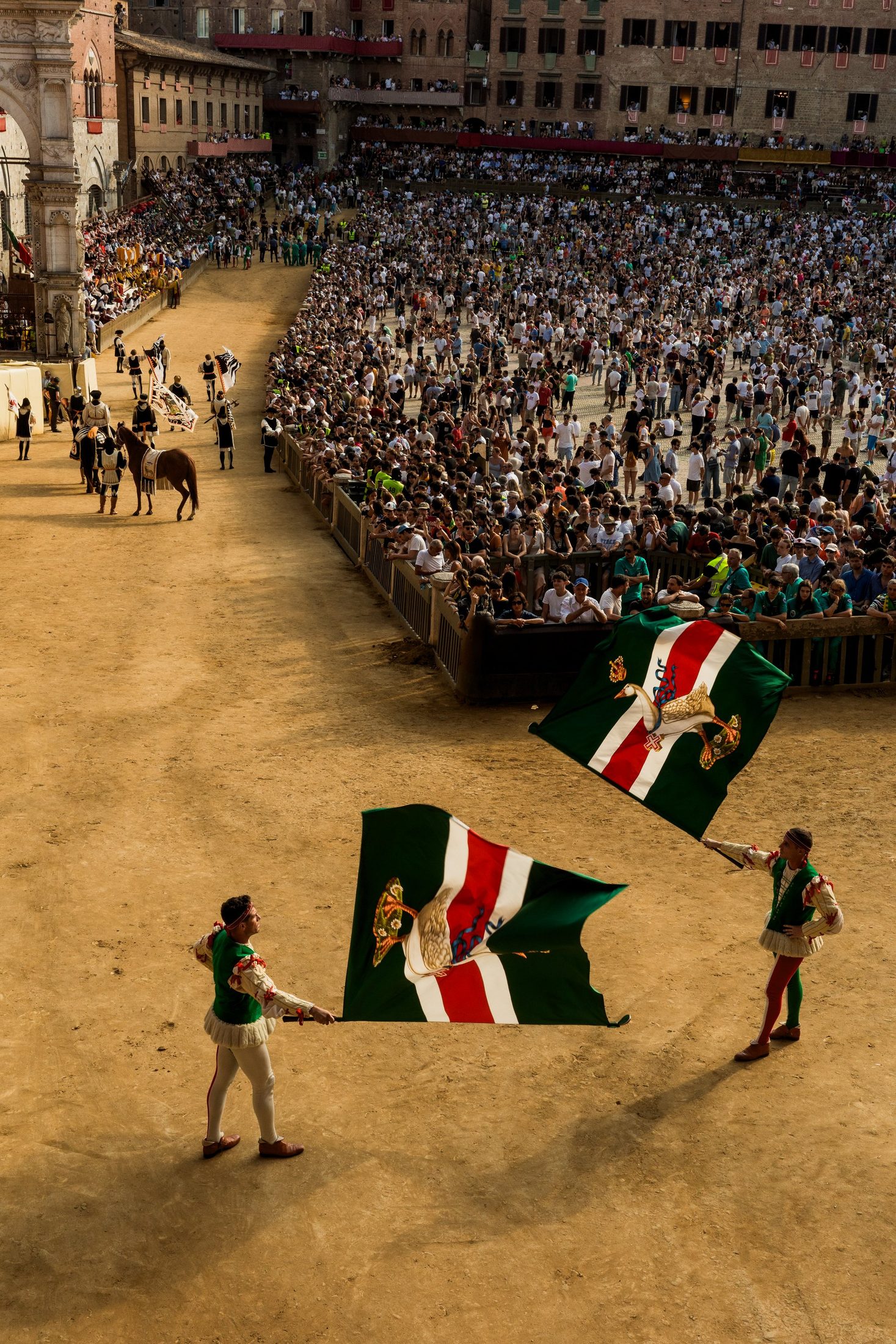
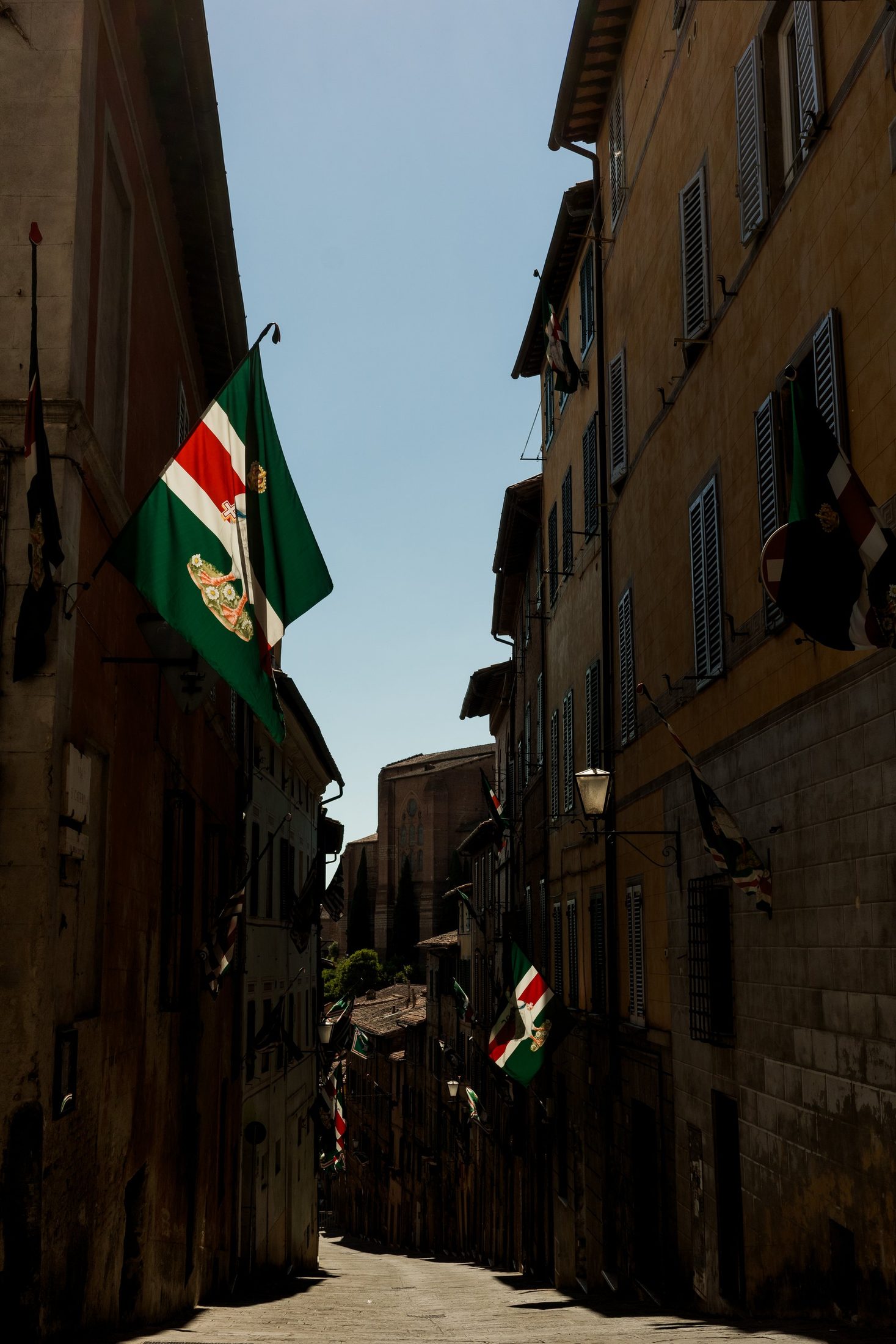
The last worth introducing is Oca, the Goose, one of the most successful and storied contrade in modern history. Revered for their passion and feared on the tufo, they entered the race as favourites. Their green, white and red swept through the streets like a tide, their chants rising like battle cries. You’ll see more of them later.
Each contrada believes, truly and wholly, that it is destined to win. And win or lose, they carry forward a centuries-old tapestry of faith, rivalry and pride that makes Siena’s Palio unlike anything else in the world.
III · Race day
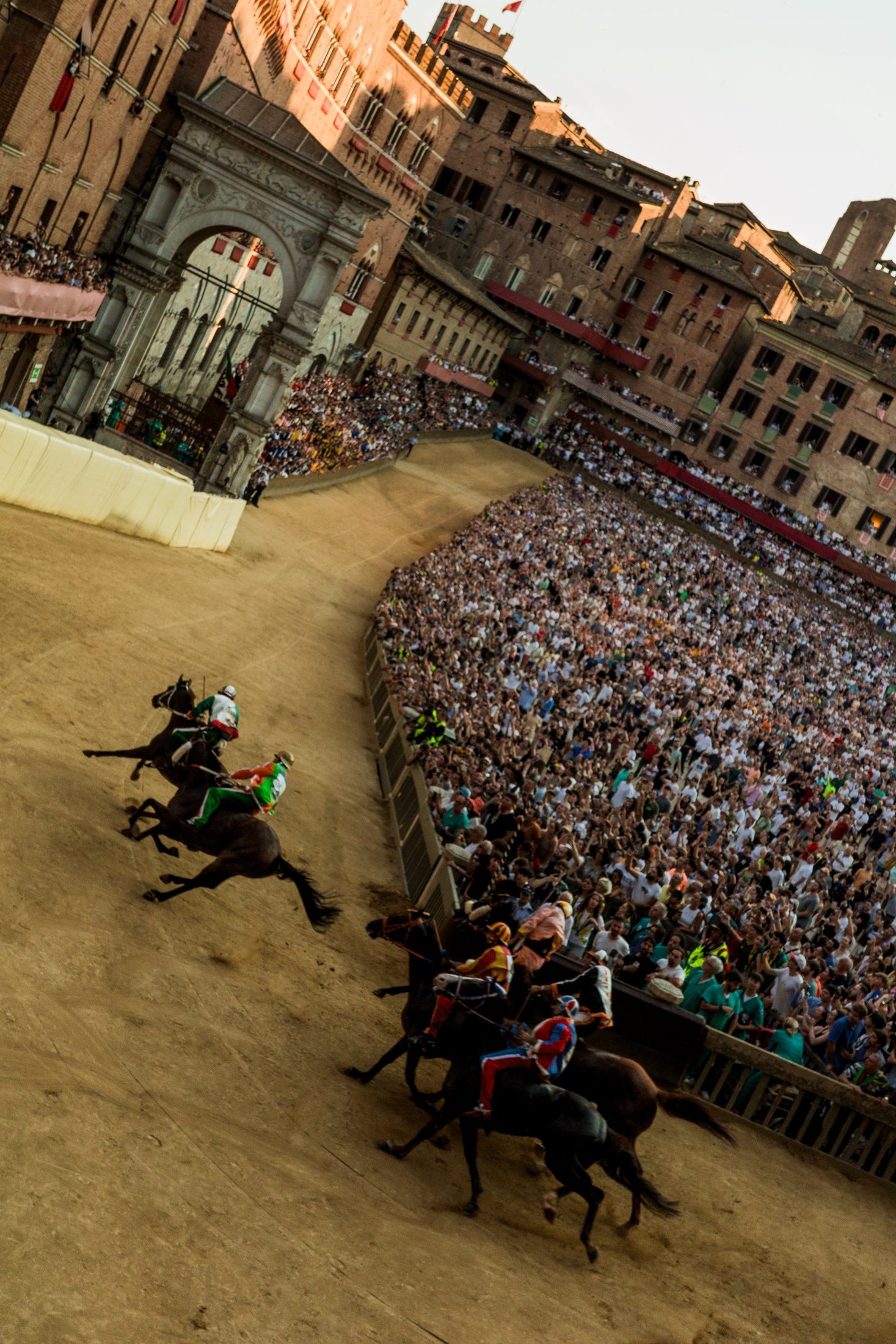
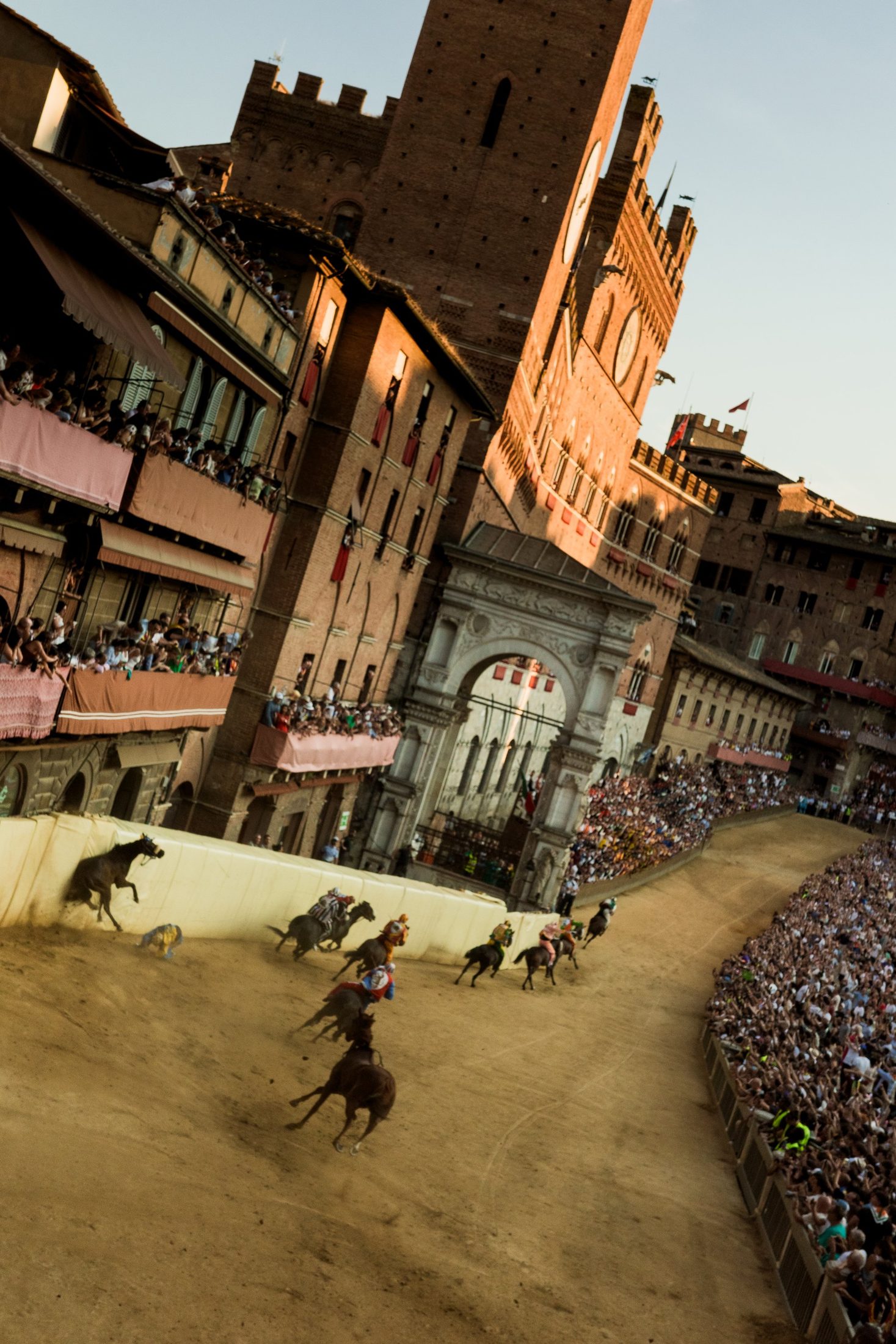
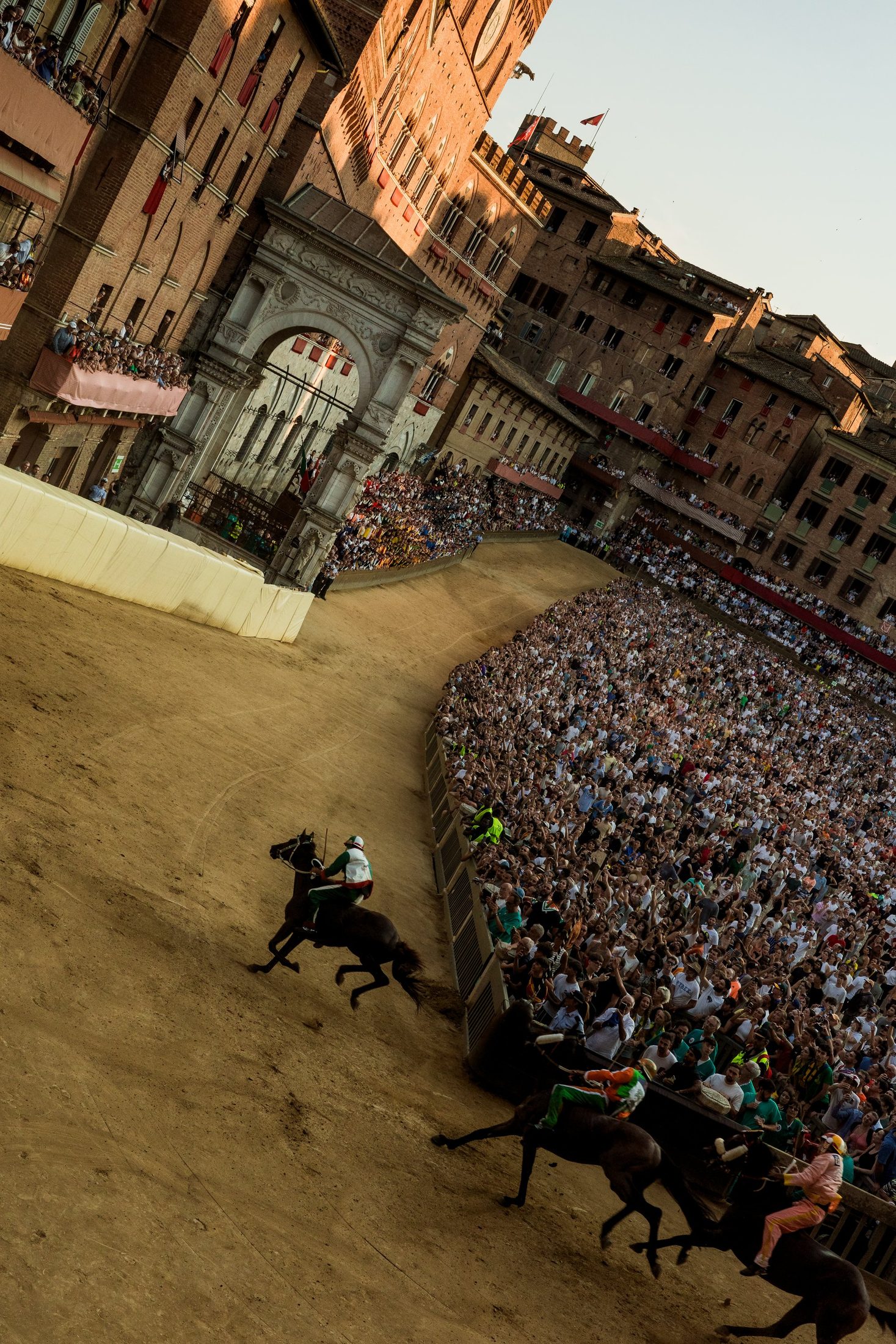
Silence. Hairs standing, sweat dripping. What follows is ninety seconds of madness.
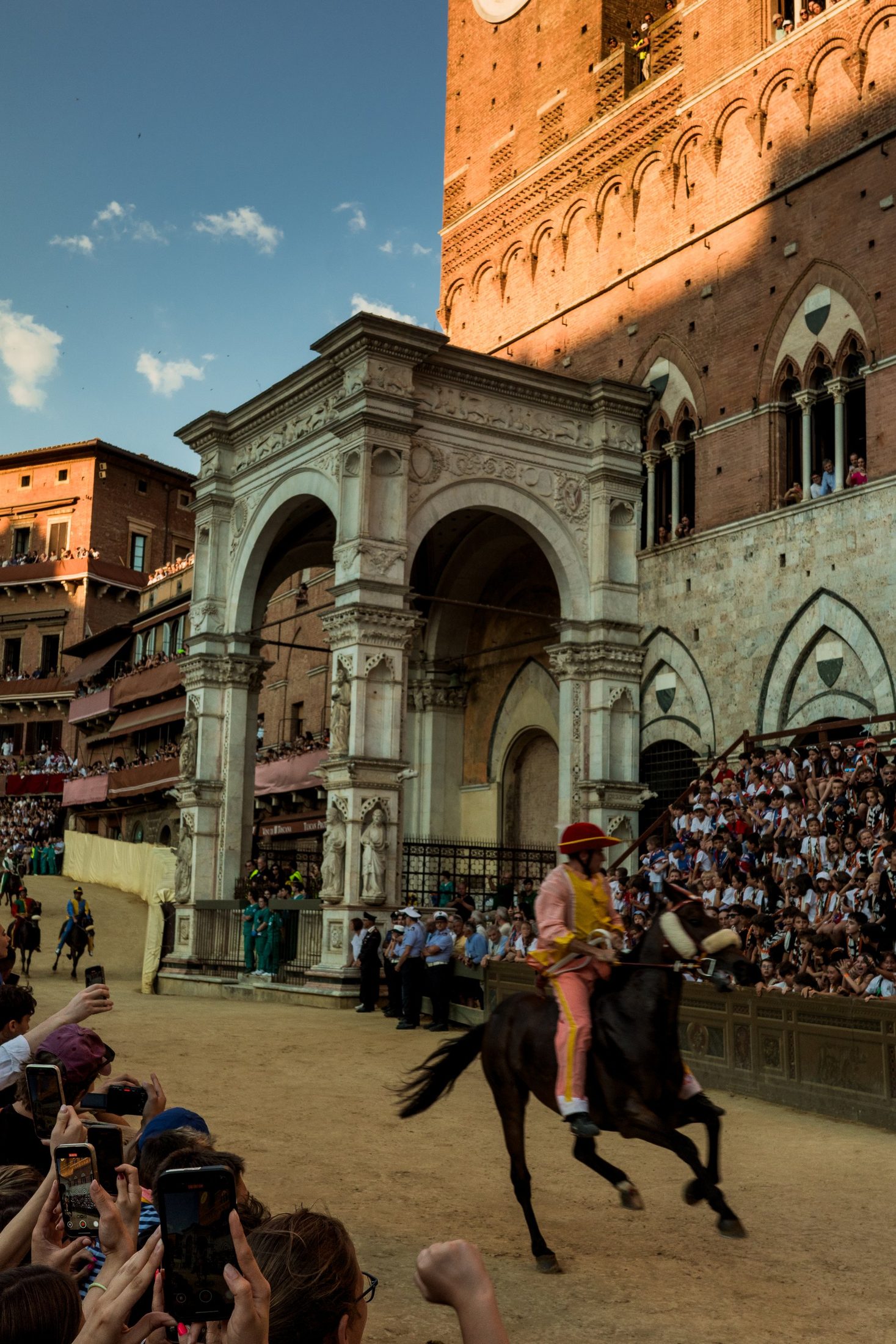
Ten horses, ten jockeys, and centuries of rivalry erupt as the canapo falls. The roar of the Piazza del Campo is deafening. Three laps, barely more than a minute, carrying the weight of generations. The jockeys ride bareback, the narrow turns are unforgiving, and the tufo track is alive beneath the hooves.
This year it was Oca that triumphed. Their green, white and red surged through the crowd, chants rising in waves of joy and disbelief. Rivalries dissolved in victory as the contrada poured onto the track in tears, embraces and song. The horse, more celebrated than any rider, became the symbol of a collective pride.
It’s hard to call the Palio a race. It is theatre, history, faith and family compressed into an instant: a living tradition where identity and belonging are not abstract ideas but something shouted, sung and fought for. To witness how much it means to these people is inspiring. Our beloved Pantera didn’t get the elusive victory they have been chasing for years, and speaking with our neighbours afterwards we could see just how much it meant. Oca celebrated well into the night. Friends who visited a week later told us the contrada were still out in the streets, chanting, singing, and proud to carry the tradition of centuries before.