
Everything Is Handmade and the Ability to Cause
A glimpse into China’s factories, the illusion of luxury, and the first real step toward En Foy Prest.
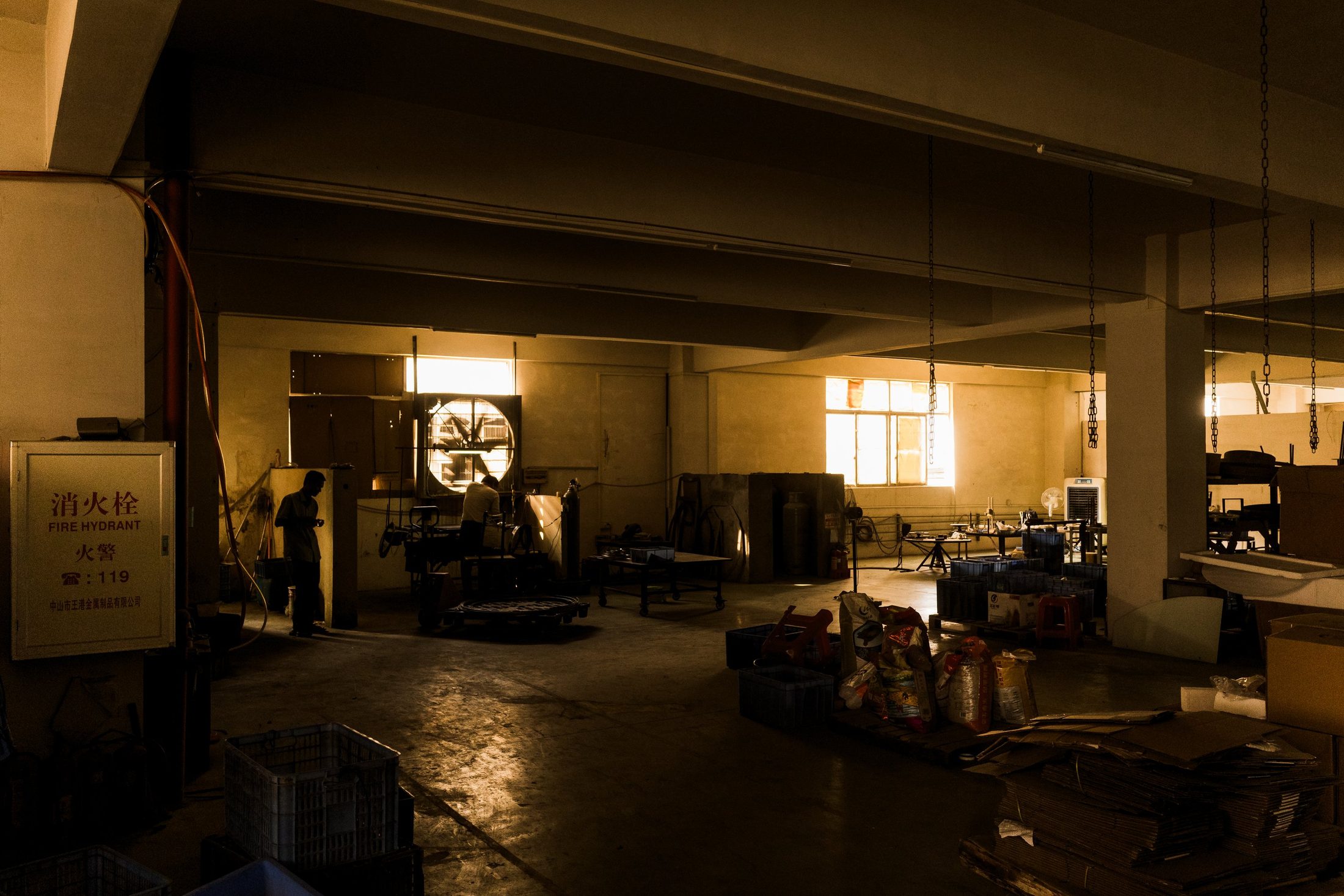
The last time I was meant to visit Guangzhou, I never made it. Well, more precisely, the visit was a cover.
I landed in Hong Kong and told my girlfriend at the time that I was supposed to continue on into China. I needed a SIM card, and with the minor issue of China’s Great Firewall, I told her that I would not be able to contact her properly for a while. This was meant to be the design and manufacturing trip I had spoken about doing for months. That first trip, instead of getting on the high-speed train to Guangzhou as promised, I got on a second plane to Madrid. It is safe to say her face when I opened her apartment door confirmed she had absolutely no idea I had never intended to cross the border into China. A different dream. A different version of myself. A different kind of longing.
Yet while I was waiting for that connecting flight, I could not help but wonder what really did lie across the delta. To Westerners, and especially to designers, China is spoken about constantly but rarely understood. The opinions range from utopia to hellscape, and most seem built from distance. I was yet to hear any stories from those who had actually been behind the curtain hiding the real story. Staring out the windows of Hong Kong International Airport, these conflicting ideas of the land my eyes gazed upon swirled in my head. It was clear there was only one way I was ever going to know: to step behind that curtain myself.
Almost a year later, I finally made the step into China.
In March this year, in conversation with my thesis supervisor and mentor, we discussed the trip again. I suggested I book flights for two months’ time. He suggested the next week. By the end of that conversation, I had booked the flights and had ten days to make a plan. Ten days is not enough time to properly plan any trip, let alone a manufacturing trip in China, which is exactly why it was enough time to stop dreaming and start moving. I landed in Guangzhou half-asleep, over-caffeinated, and carrying the strange private pressure of a twenty-two-year-old trying to prove to himself that the world he had been describing was not just a beautiful idea. For years I had spoken about making things. About beauty, taste, objects, craft, and pursuing design as a serious career. But there is a brutal difference between talking about making things and sitting across from a factory owner in Zhongshan, discussing tooling, prototypes, minimum order quantities, and whether your idea can survive contact with reality.
Design is not what you can draw, what you can render, or what you tell people you intend to make. Design is what you can cause.
This was my first real attempt at causing something to happen, at crossing the barrier from the hypothetical into reality. Consumer to producer. In three days I moved through Guangdong Province: Guangzhou, Zhongshan, Guzhen, Foshan, Jiangmen. Names unknown to me less than two weeks earlier became places of cars, towers, factories, lunches, samples, glass, metal, catalogues, negotiations, and heat. Suddenly I was there, in the Pearl River Delta, moving from factory to factory with Bailey, my translator, trying to understand not only how things were made, but whether this was the life I wanted.
Factory. Negotiate. Move. More factories. Design discussion. Sourcing. Planning. Factory visit. Attempt to sleep. Repeat.
That was the rhythm. Coffee to stay awake. Sleeping pills to stay asleep. One run squeezed in somewhere between exhaustion and the next meeting. It was full-on in a way that made ordinary travel feel decorative. This was not sightseeing. This was not tourism. This was an attempt to enter the physical machinery behind the object-world I had spent years thinking about. The evening before my last full day, I looked out from the sixtieth floor of the hotel. It was a brief moment of calm as I watched the lights of the factories and cars below. I had one more day to get an agreement done and confirm the manufacture of my design. Below me was the world I had spent years speaking about from a distance. In the morning, I would have to stop observing it and ask it to make something with me.
But even with my own design pressing against every hour of the trip, China refused to remain only a backdrop. It kept interrupting my assumptions. What I found in China was not the caricature I had inherited. It was not simply cheap things, bad things, fake things, plastic things, or copies. It was all of that, yes, but also much more uncomfortable and much more interesting. China can make the cheap object for a market we barely know exists. It can make the strange object, the ugly object, the almost-right object, the object destined for a discount shelf in a country I will never visit. But it can also make the beautifully finished object that later appears in a European showroom with a more elegant name, a better story, and a much higher price.
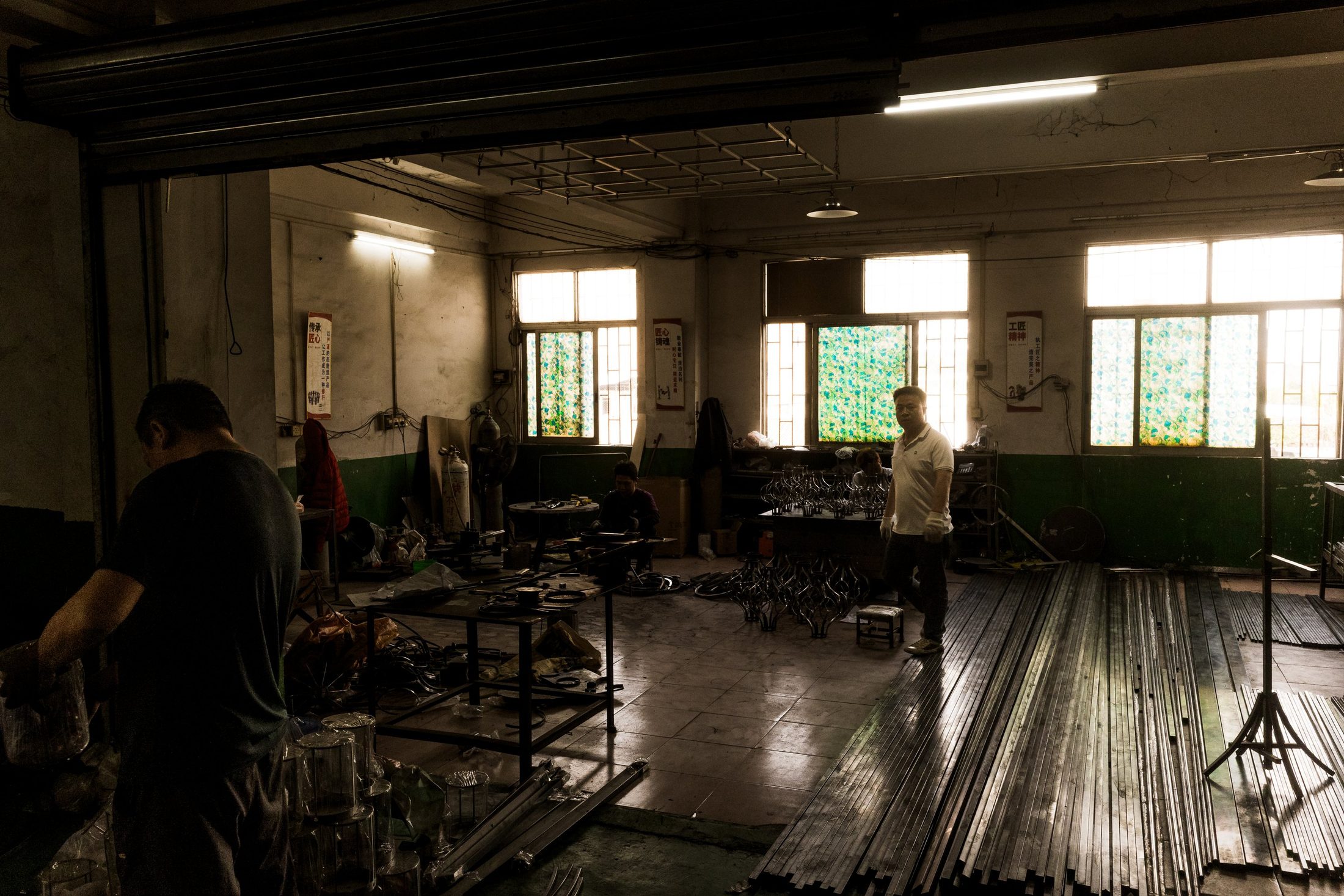
Metal work in a lighting factory: a bespoke piece being made for a Canadian hotel. Guzhen, Guangdong Province · March 2026
That was the first real confrontation. “Made in China” is not a quality level. It is a geography of capacity. China makes what it is asked to make. If the brief is cheap, the object becomes cheap. If the brief is lazy, the object becomes lazy. If the brief is refined, demanding, well-funded, and carefully managed, the object can become incredible. The moral failure is not always in the factory. Frequently it is in the market. Sometimes it is in the brand. Sometimes it is in the consumer. Sometimes it is in the desire to pay nothing and still feel superior.
This made the whole mythology of objects feel unstable. We like to imagine that cheap Chinese products and luxury European products belong to totally separate moral worlds. In China, I saw how uncomfortably close those worlds can sit to each other. The low-end object, the luxury export object, the fake, the experiment, the handmade, the machine-made, the vulgar, the beautiful: all of it exists inside the same industrial organism. China does not simply manufacture our objects. It exposes the illusions we attach to them.
That is what made the trip so confronting. It did not only make me look at China. It made me look at the social life of objects once they leave the factory. By the time an object reaches a showroom, a website, a hotel lobby, or a dining table, it has gathered stories around itself: country of origin, brand mythology, price, taste, status, memory. Those stories matter. They are part of why objects become meaningful. But in China I was reminded that before an object becomes a story, it is first a thing made by human hands, inside a real place, by people with their own lives, skills, pressures, and pride. Objects with stories are, for me, more likely to be kept and used, so this is important to retain. But the risk is overlooking the realities of quality, ethical production and consumption, and the real people behind the creation process.
The phrase that kept returning to me was simple: everything is handmade somewhere.
Even the most industrial object passes through hands. Someone carries the component, checks the surface, wires the fitting, packs the box, wipes the glass, moves the sample, adjusts the finish. Someone makes the thing more real than it was yesterday. We talk about factories as if they are the opposite of craft, but that is too simplified. A factory is not the absence of human making. It is human making organised under pressure: pressure of time, cost, scale, margin, export, taste, and negotiation. That does not make every object beautiful. It does make every object human. I felt this most strongly in the lighting factories. Components and assembly revealed themselves as two very different worlds. A light was not one thing. It was glass, cable, fitting, driver, metalwork, packaging, certification, labour, relationship, cost, risk, and taste. Every product was a tiny civilisation of decisions. Every object carried the residue of what had been asked of it.
There was also a private irony in the trip. I had spent months speaking and writing about beauty, ornament, excess, and emotional value. I had pushed against the modern suspicion of decoration, the inherited idea that ornament is somehow immoral, unserious, or wasteful. Then I found myself in Chinese factories surrounded by catalogues of forms, finishes, imitations, gold edges, Italian references, marble effects, glass, brass, and decoration in every possible register. Some of it was awful. Some of it was strangely beautiful. Some of it was better made than people in the West would like to admit. I realised that taste is not proven by the absence of ornament. Taste is proven by judgement. The factory does not decide whether something is vulgar or beautiful. It executes a set of values. Those values may come from a designer, a brand, a market, a client, a price point, or a fantasy of what people somewhere else want to buy. In this sense, China makes the question of taste unavoidable. It will make almost anything. That is both its power and its danger. It forces the designer to ask not only, “Can this be made?” but “Should this be made, and what kind of world does this object belong to?”
One of the strangest and most beautiful things I noticed was the love for Italy. Italy appeared everywhere as a symbol: in catalogues, in product names, in design references, in the gestures of luxury. Even inside this immense Chinese industrial system, Italy remained a shorthand for taste, romance, refinement, and legitimacy. That fascinated me. Here I was, a New Zealander, building a brand with an Old French motto, inspired by European craft and beauty, trying to manufacture in China, while Chinese factories themselves looked toward Italy as a dream of style. When I mentioned that I had studied design at Politecnico di Milano, there was visible intrigue and excitement without fail. My fascination with China was mirrored by their fascination with Italy. The whole thing was layered almost to absurdity.
And yet beneath the cultural symbolism, the work itself was practical. Very practical. Can we make this? What size? What finish? What material? What minimum order? What certification? What price? What lead time? Can the glass do that? Can the opening be irregular? Can the inside glow? Can the object feel alive rather than dead? In one meeting, in a high-rise tower in Zhongshan, I found myself negotiating the first serious prototype of my own design. Two weeks earlier, I had barely known the city existed. Now I was sitting there with Bailey translating, discussing an object that had lived in my drawings and imagination, and watching it become possible through another person’s factory, knowledge, and willingness to try. Mr Yang, the boss of the assembly manufacturer I met, was remarkable. There was an eagerness to collaborate that surprised me. A willingness to try. A lack of the hesitation I have often felt elsewhere. Of course, this does not mean everything was simple, or that trust appears instantly, or that business in China is some romantic world of effortless possibility. It is still business. It is still negotiation. There is still risk, ambiguity, translation, misunderstanding, and money on the table.
But there was energy. That energy mattered to me. It made En Foy Prest feel real in a way it never had before. En Foy Prest is a conversation for another time. To keep it short: it has been a dream of mine for a long time that is finally becoming reality.
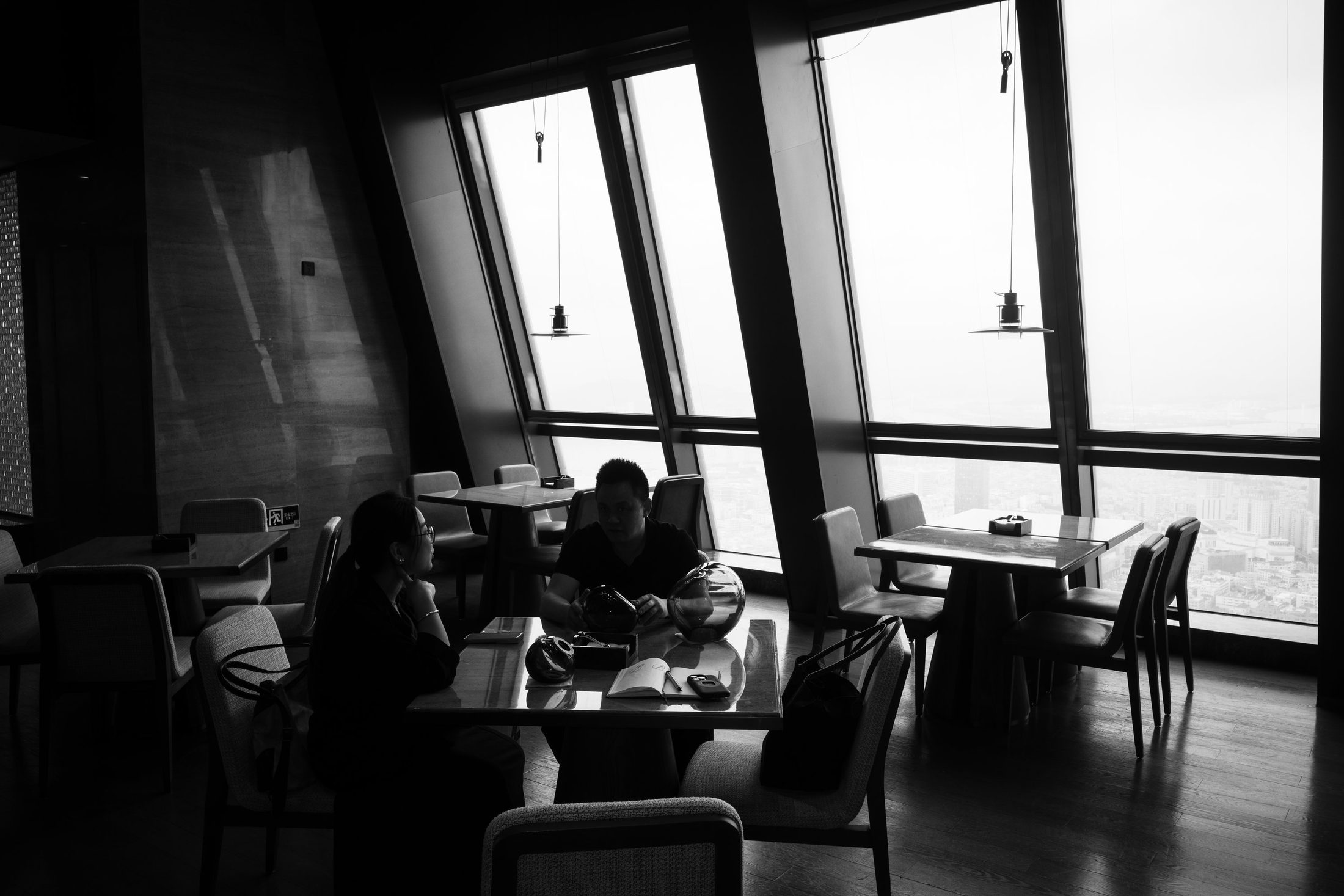
Until then, En Foy Prest had been words, drawings, taste, longing, and conviction. In China, it became logistical: a factory, a person, a price, a prototype, a risk. I had gone to China asking practical questions. Can I find a manufacturer? Can I build a relationship? Can I make something to the level I want? Can I work between New Zealand, China, and eventually Europe? Can this become the operating system for the life I imagine: New Zealand as a base, overnight flights to Guangzhou or Shanghai, online communication, factory visits, collaborators, translators, prototypes, campaigns, sales, reorders, expansion? But beneath those questions was a simpler and more frightening one.
Is this life for me? To my surprise, the answer seemed to be yes.
I liked the movement. I liked the intensity. I liked the meals, the factories, the strange cities, the pressure, the negotiation, the feeling that a drawing could become a thing if I asked the right questions and found the right people. I liked being far from home and still working toward something that made home feel more meaningful. I liked the sense that New Zealand did not have to be the edge of the world, but could be a base from which to move through it. This was not just a manufacturing trip. It was a test of identity.
All creative and intense pursuits are ultimately exercises in self-discovery. A book, a painting, an Ironman, a business, a light: each one asks you to become the person capable of making it. The object is never only the object. The object is evidence. It shows what you can see, what you value, what you can bear, what you can risk, and what kind of person you are becoming through the act of making. By the time I left, I had done something I was genuinely proud of. I had travelled through cities I did not know, met factories, negotiated through a translator, found a manufacturer willing to collaborate, and set a prototype in motion. I had not built a brand yet. I had not solved everything. I had not proved the whole dream. But I had taken the first real step from imagination into manufacture. That matters.
There is a particular kind of confidence that only comes from contact with reality. Not moodboards. Not theory. Not talking. Not planning. Reality. A person across the table. A price. A sample. A compromise. A yes. A no. A possible failure. A decision. I came home knowing something I had not known before. I can get on a plane, fly to China, meet factories, build relationships, discuss a design, make a deal over lunch, and begin the process of having an object made. That is a skill. More than that, it is a doorway.
I had developed the skill to cause.
On the flight home, somewhere over the Tasman, the clouds began to look familiar again. After three days of factories, towers, samples, coffee, sleeping pills, negotiations, Cantonese lunches, and car rides through cities larger than my sense of them, I was suddenly close to New Zealand. Close to fresh air. Close to the small green country at the bottom of the world where this all still has to become real. I felt happy to be coming home. I felt happy to be Kiwi. I felt happy to have gone.
China had shown me the backbone of the modern object-world. It had shown me that cheapness and luxury are often closer than we admit. It had shown me that everything is touched by human hands somewhere. It had shown me that the factory is not the opposite of beauty, but one of the places where beauty is either protected or destroyed. Before China, making still belonged partly to the imagination. It lived in drawings, conversations, essays, and ambition. After China, making became physical. It had hands, voices, lunches, samples, prices, risks, and names. I went there looking for a factory. I came back with something more useful: a clearer understanding of objects, and a clearer understanding of myself.
Everything is handmade somewhere. Every object carries the values that caused it. And every serious creative life eventually demands the same question: can you turn what you believe into something real? For the first time, I knew that I could. I can now cause things to happen.