Myclable
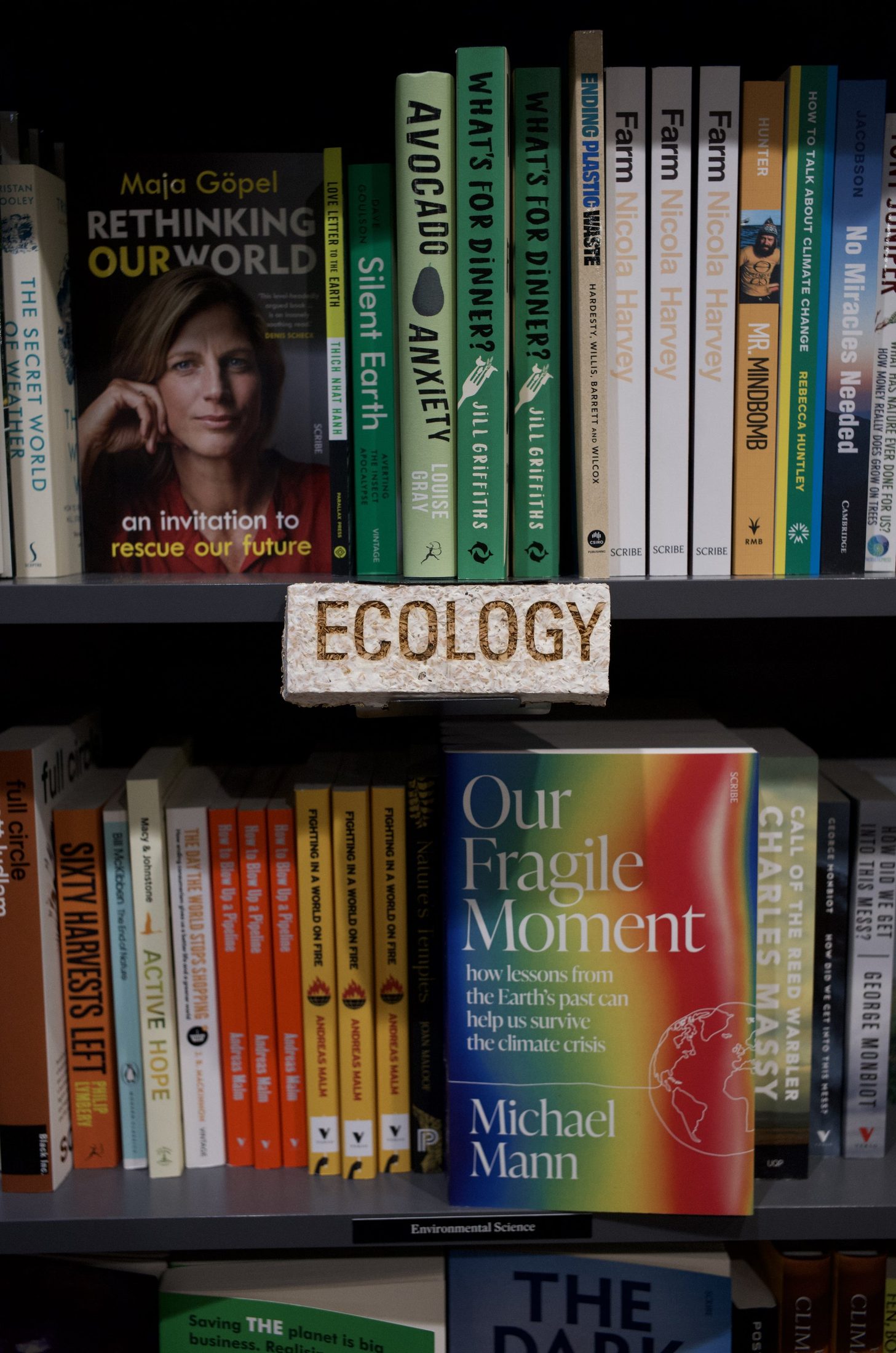
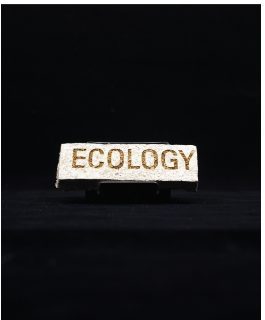
Bookshop section labels grown from reishi mycelium on spent coffee grounds, for TERRAIN’s new bookstore and studio on Brunswick Street.
TERRAIN was opening a bookstore and studio in a Fitzroy shopfront that had been a barber, a film lab and a milk bar, with a stated mission to rejoin the human and natural world. The brief from the studio was a single material, mycelium, and the direction came from meetings with Cristina Napoleone about where a biodegradable, evolving material would actually be useful in the shop. Signage, packaging, book holders and section labels were weighed against each other. The labels won: the sections of a new bookshop change and are never planned for, so they suited a material that is not meant to last forever.
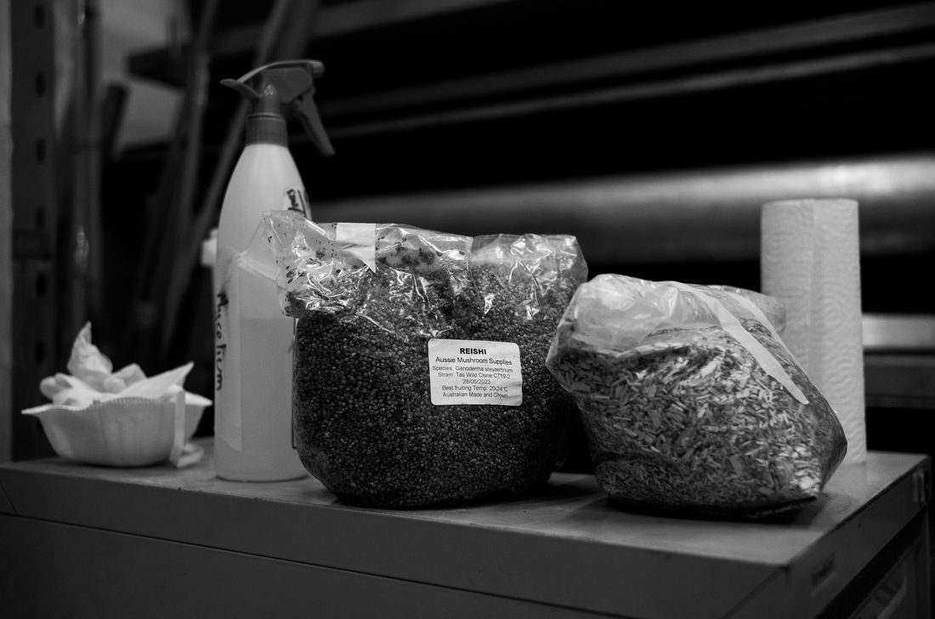
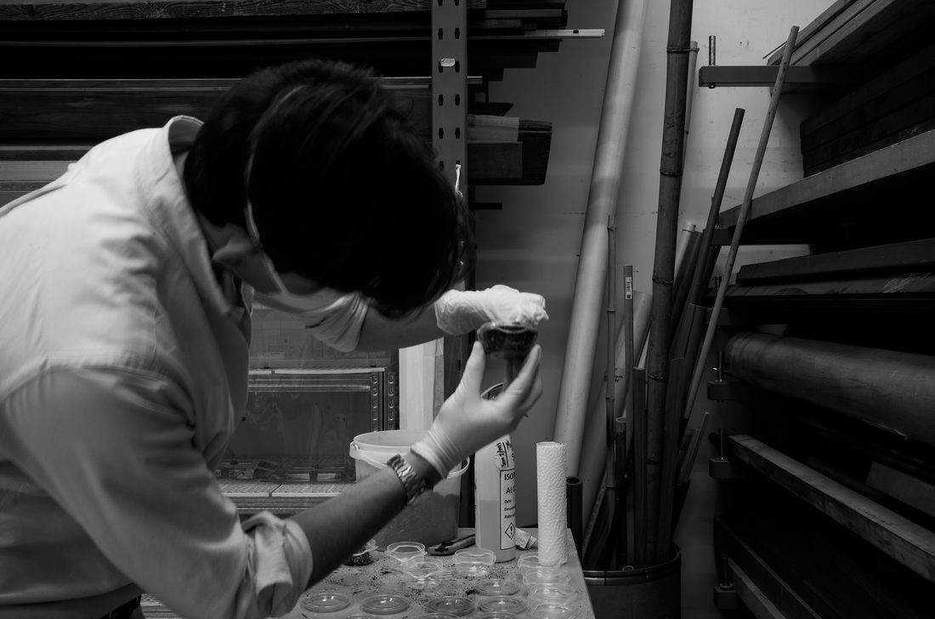
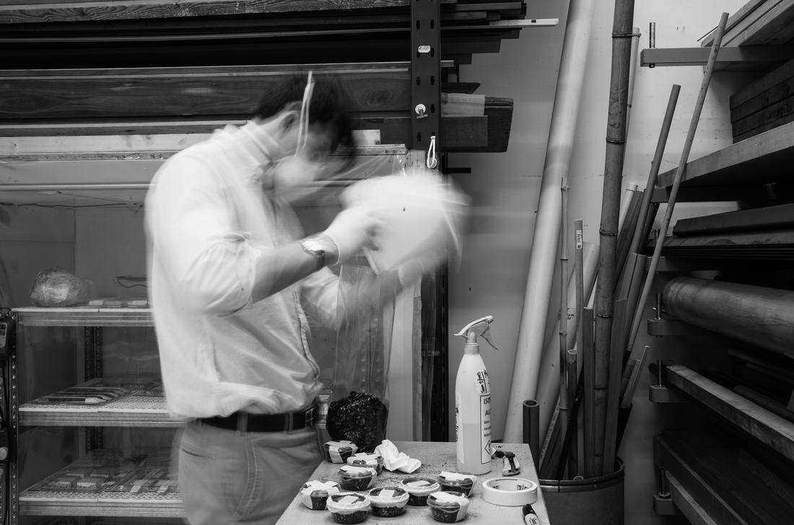
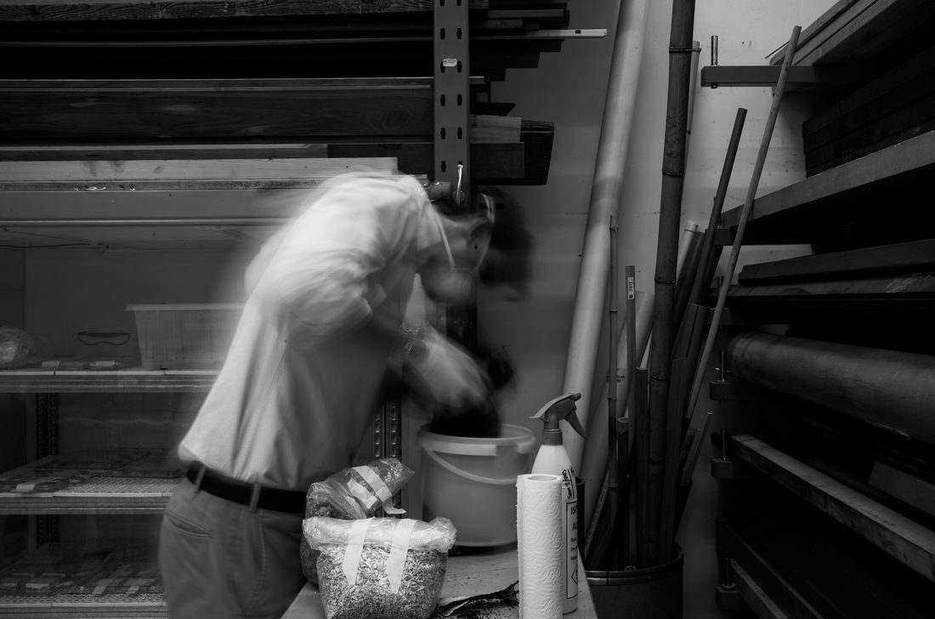
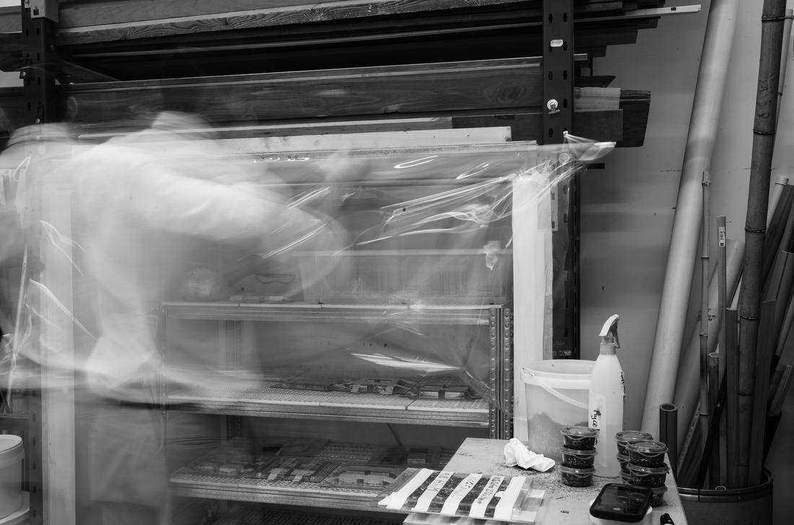
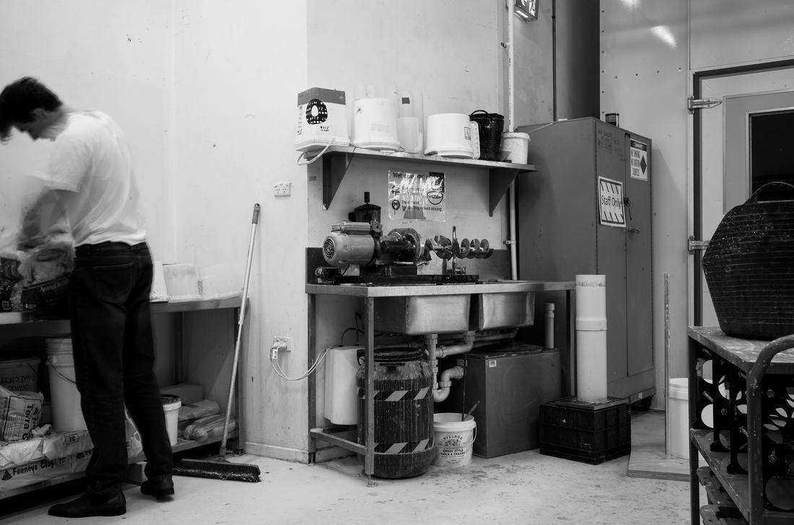
The material was grown, not bought. Reishi spawn was mixed with spent espresso grounds from the café down the road, which arrive already sterilised by the brewing process and still hold almost all of their biomass, and with shredded pine bedding sterilised on the bench. The mixture was packed into moulds, labelled and left in a grow tent at 25 to 26 degrees and over ninety per cent humidity, then dried and baked once the mycelium had bound it. Two mixtures were tested against each other, alongside trials of growth outside the mould and of neodymium magnets and wire frames cast into the blocks as fixings.
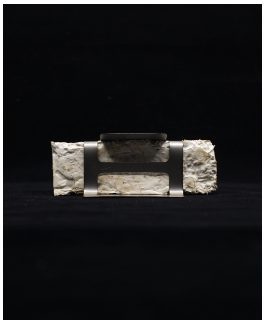
Size tests on the shelf settled the form: one solid block per section with the name laser-etched into its face, rather than individual letters, so the label reads clearly without taking the shelf over. In the shop the block sits on a folded steel bracket that hooks over the shelf edge. The photographs here were made in the RMIT workshop during the grows, mixing, packing, checking the tent, and in the shop once the first labels went up.
Section labels are not forever. That is exactly what made mycelium the right material.