
Becoming the Project
The longer version: how an honours thesis in Melbourne became a company in Auckland, what China and Europe taught it, the method it arrived at, and the manifesto En Foy Prest holds itself to.
Ten days to a plane ticket, three days to a different object
In March 2026 Soumitri asked when Hunter was going to China. He said maybe May. Soumitri said, why not next week? Two hours later the flights were booked. Ten days after that Hunter landed in Guangdong with a technical pack for an ambitious pendant light, a translator named Bailey, WeChat, Alipay, and no manufacturing network at all. He went to Zhongshan and to Guzhen, the lighting capital of China, where whole streets are organised around fixtures, glass, wiring and catalogues.
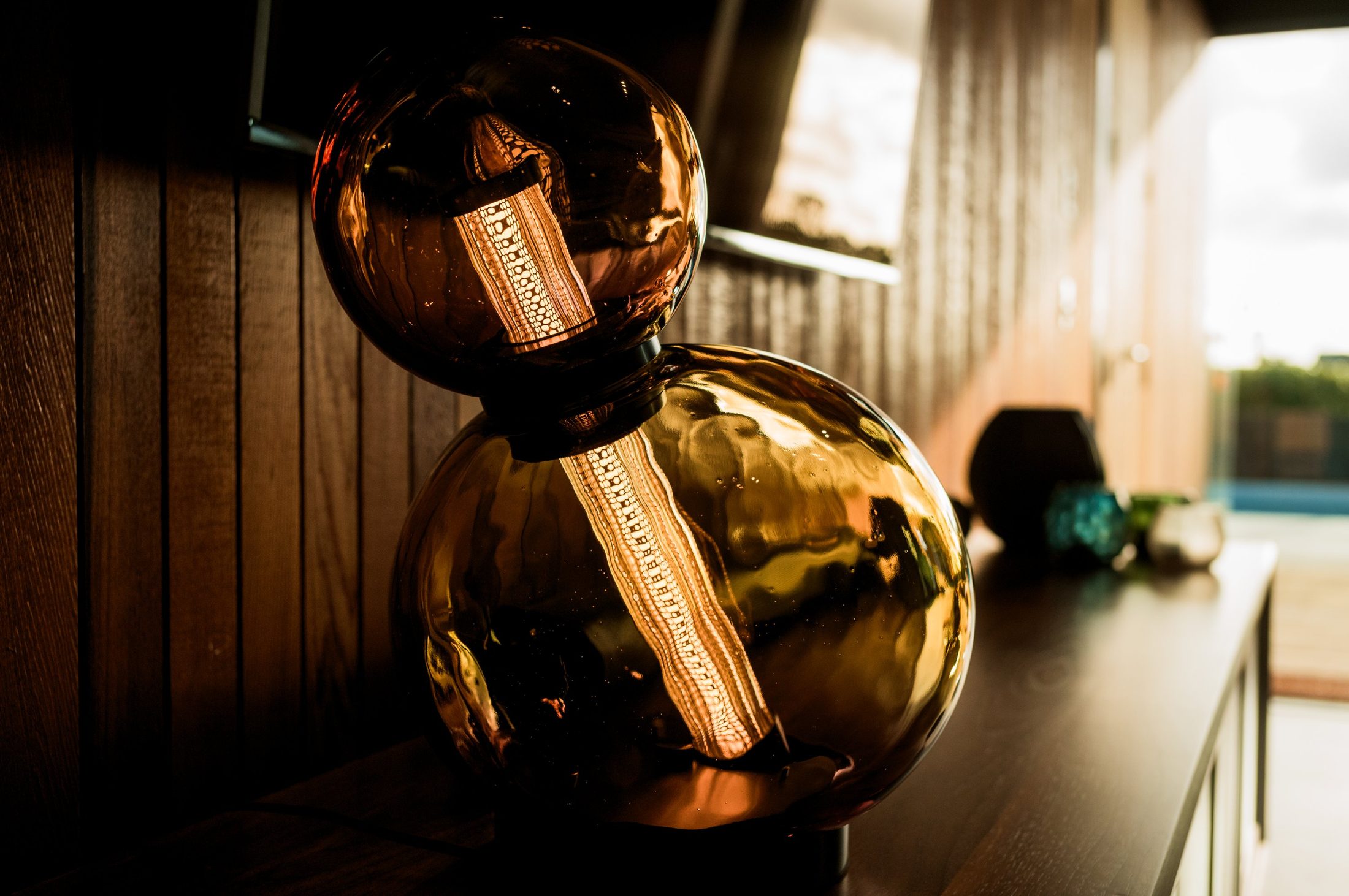
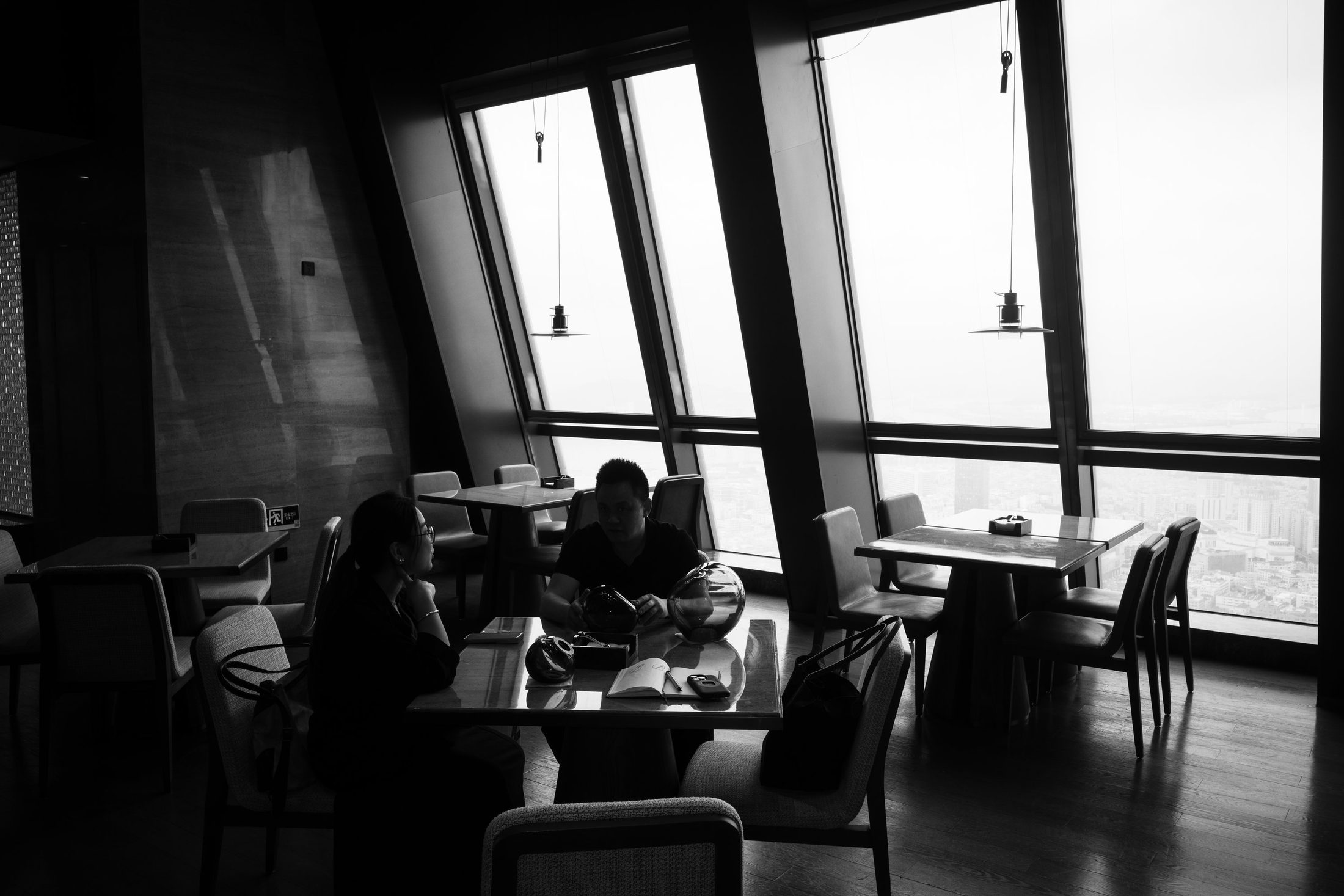
The pendant did its job: it got him into rooms. Then, at another factory, he found two pieces of amber glass and could not stop looking at them. Heavy with colour, strange in form, found rather than styled. Mr Zhang, the owner of the factory he ended up working with, held them, stacked them, turned them over on a table between a diary, a phone and tea, and the project changed in front of them. The glass did not want to hang. It wanted to sit. The pendant became a table light, and the table light became Product 001.
Three days in China taught him more about design than he expected. That a factory is not the last stage after design but part of design’s intelligence. That “made in China” is not a quality level but a geography of capacity: if the brief is cheap, the object is cheap; if the brief is demanding and properly resourced, the object can be extraordinary. That the relationship with a good manufacturer is less like two sculptors fighting over one block of marble and more like two chefs cooking together, each adding what the other does not have. And that his own job was not to do every task, but to hold the centre: the taste, the direction, the atmosphere, and what must be protected at all costs.
This became the working model for the company. Designed in New Zealand. Made where it can be made best, for now in China. Positioned through Europe, where taste is fed, tested and sharpened. Hunter describes his own role as conducting an orchestra rather than learning every instrument: he will never blow glass like a family who have blown it for three generations, or cut cloth like a Neapolitan tailor, and he does not pretend to. His job is to hold the centre of the object and gather the right specialists around it. Everything is handmade somewhere; even the most industrial thing passes through hands. The studio’s three working terms, design for manufacture, getting things made, and collaborative design and manufacture, all come down to the same promise: to keep the soul of an idea intact from the first drawing to the thing you can hold.
Taste leaves the page
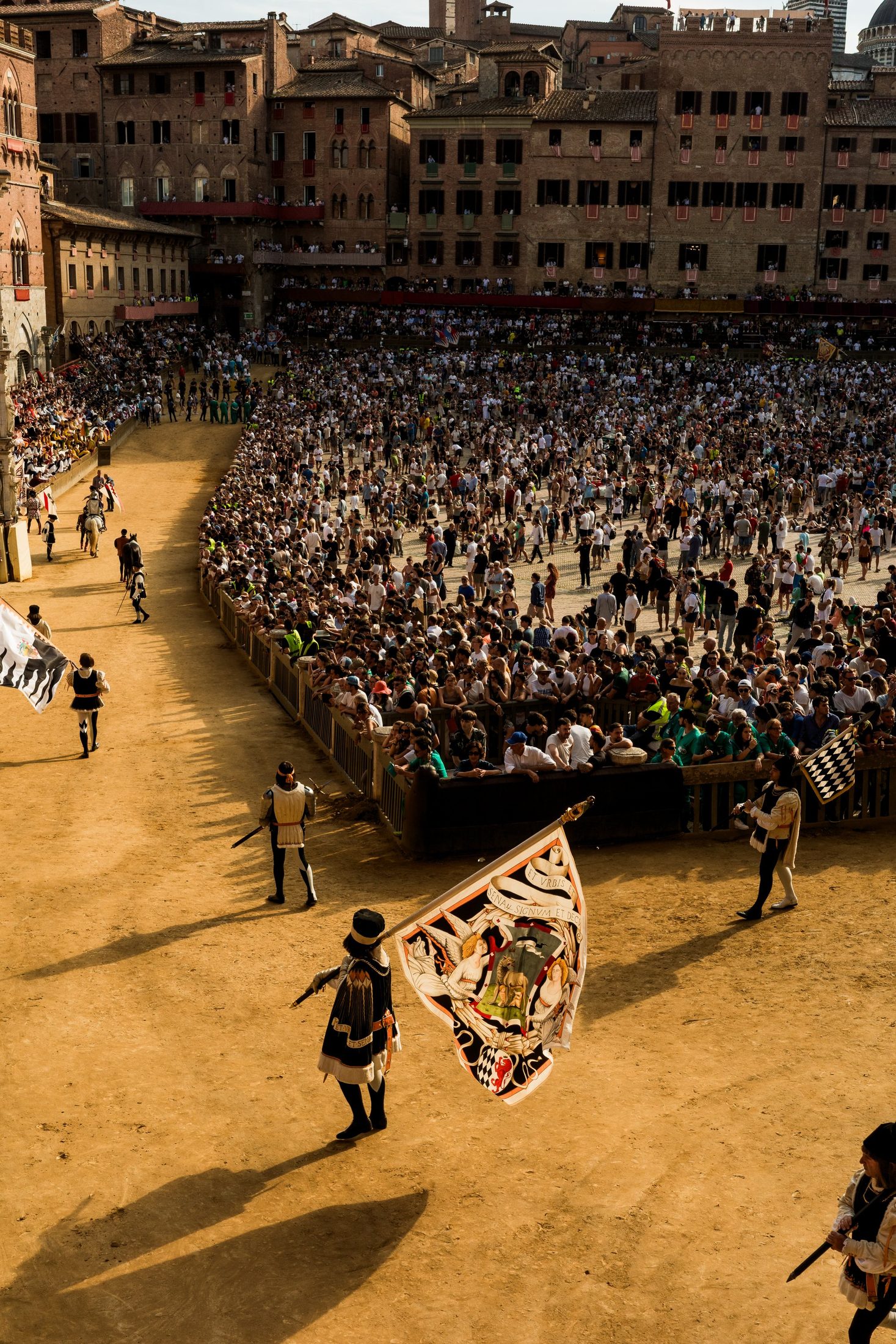
China gave the object a body. Europe asked what kind of world it was for, and it had been asking for years: 2017, the summer of 2019, the exchange, the summer of 2025, and finally April and May 2026, when the question became urgent. Milan Design Week, PAD Paris, the Prado and the Thyssen in Madrid, showrooms, streets, dinners and the clothes people wore to run errands all became lessons in the same thing: objects are never judged by a neutral public. They are read through cultural codes, class codes, national codes and personal histories. Goya showed that a maker’s life presses into the work until the two cannot be separated. Hopper showed that light is not what reveals a room but one of the materials feeling is made from.
Hunter’s own picture of taste is a hotel with many floors, each with its codes, brands, manners and forms of recognition. The danger is not designing for a floor; that may be necessary. The danger is not knowing which floor you are on, and the greater danger is one floor pretending to be the whole building: the airport room, the cultureless chair, the hotel lobby that could be in any city and therefore belongs to none. The enemy of En Foy Prest is not difference. It is global sameness. Design for your people, and let others design for theirs.
A few objects carry this argument for him better than any theory: a Longchamp bag dragged through airports until it became a companion, a pair of Edward Green Dovers whose creases have become his, a Rubinacci jacket that drapes like armour. Beauty, on this account, is not the final layer added after function has been solved. It is one of the ways an object functions at the level of a human being.

Experience, attention, taste, judgement, making, practice
This is not a universal design system. It is the way the thesis learned to move from personal material into actionable design, and it is how the studio still works. Life is the fieldwork. The object is not the beginning of the process; it is the stabilised outcome of a life passing through the designer and returning as form.
Becoming the Project
En Foy Prest: Design, Autoethnography, and the Beginning of a Design House is Hunter’s honours thesis: written, designed and produced by him, printed by Colormania and bound by Auckland Bookbinding in 2026, and set in Futura PT and Miller Banner. It opens on a beach in Northland and closes with a manifesto.
THE MANIFESTOGood design is not enough
Good is too often the word given to things that behave. Things that solve their assigned problem, photograph well, offend no one, and leave no mark on the life around them. Good can be clean, efficient, responsible, and still dead. En Foy Prest is not interested in dead things.
Design should celebrate life. It should celebrate humanity, nature, culture, ritual, weather, bodies, rooms, meals, journeys, families, friendship, work, rest, and the private theatre of ordinary days. A human being is not a use case. A home is not a system. A shirt is not only coverage. A lamp is not only light.
En Foy Prest does not begin by asking what can be sold. It begins by asking what deserves to exist. A thing should earn the right to stay. Leather should darken. Cloth should soften. Metal should mark. An object should not die when novelty leaves it; it should begin its real life there. Ownership should be devotion, not consumption.
Beauty is not decoration. It is the force that makes people smile before they know why. Ornament is not a crime. Meaninglessness is. Design should belong somewhere: it should carry the marks of people, place, climate, ritual and belief. Design for your people. Let others design for theirs. If the work pleases everyone, sharpen it.
Make beauty useful.
Make use beautiful.
Let objects gather memory.
Let culture speak.
Let nature breathe.
Let joy sit at the centre.
Let the work say something.
If it is only one thing, make that one thing worthy of a life.
From the En Foy Prest manifesto, 2026. The full text closes the thesis Becoming the Project.
For when I next look the reaper in the eyes, I wish nothing more than my journey there to be of my own conviction, and to have loved every step of the way.
HUNTER H MASFEN, 2026